Some of the most fun I had writing these prayers was when I got to explore history. Finding something that happened on that particular date, and fleshing out a story. I tried to make them all stories with a moral lesson, but this one is just straight history, mainly because it’s U.S. Navy history which every Sailor ought to know. Now you can too.
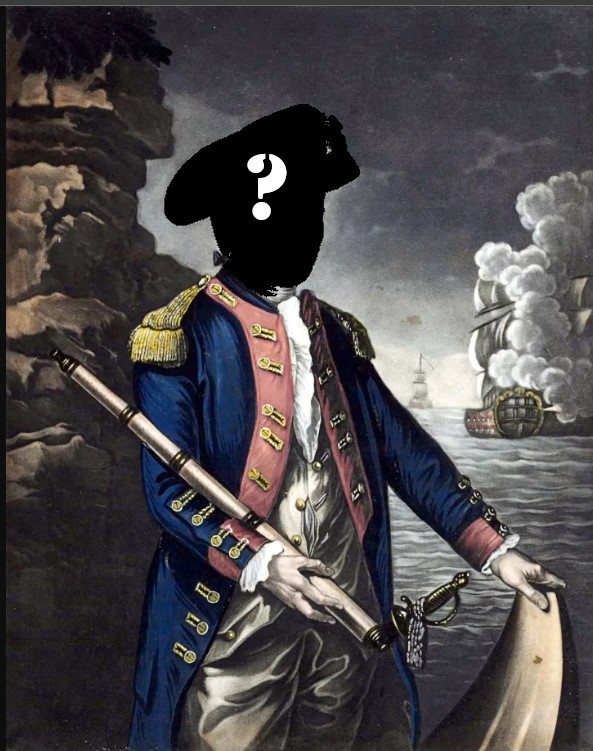
When the young captain stepped onto her deck for the first time, he had no idea how much longer the 13-year-old merchant vessel would last, but the Duc de Duras was a gift of the French king and he was grateful. Designed by her builder to be easily converted to a man-of-war, she was large for her 64-gun class, which meant that the Captain had room for extra crewman for boarding parties and prize crews. He would put both the extra space and the extra crew to good use. During the ship’s first cruise after her outfitting for war, she took 16 merchant vessels as prizes in little more than a month. But the really challenging part was yet to come.
On the afternoon of September 23, elements of the British Baltic Fleet came into view while off Flamborough Head on the Yorkshire coast of England. The American Captain turned his ship directly toward the largest enemy ship he could find and engaged the HMS Serapis in close quarters battle. The two ships exchanged broadsides, and the American ship—rechristened during her refit and now called the Bon Homme Richard, began taking on water. The fight was at such close range that the two ships collided several times, and after one particularly hard impact the captain of the Serapis asked his American counterpart—with typical British cheek—“Have you struck?” (The joke being the British captain’s use of a phrase that could refer either to the recent collision or to the method of ships to indicate their surrender—“striking,” meaning lowering, their national flag.)
The American captain’s reply has echoed throughout the ages, and is a motto of the US Navy, “Sir, I have not yet begun to fight!”
The battle would indeed rage on for another three hours before Captain John Paul Jones could claim his victory. He won the fight, but lost his ship when she sank 36 hours after the British surrender, succumbing to her battle wounds. The ship that CAPT John Paul Jones first boarded on this date in 1779, he renamed the Bon Homme Richard to honor his hero, the U.S. Ambassador to France who was also a publisher, and whose most popular publication, the Poor Richard’s Almanac, was published in France as “Les Maximes du Bon Homme Richard.” The Bon Homme Richard, one of the U.S. Navy’s most famous ships, was named for Benjamin Franklin. Two more U.S. Warships would bear the name, but none would leave as indelible a mark on the history of both the United States and her Navy as that first—originally French—ship.
LET US PRAY
Almighty God, as we practice to preserve peace by preparing for war, we thank you for the heroes of our past who have bequeathed to us such a rich heritage and tradition. Help us to draw inspiration from that heritage and give us the strength and the courage to live up to their example, to never quit in the face of adversity, to make the best of any situation, and to pass on to those who follow that which we have been so generously given. For You are our utmost inspiriation, Who gives wisdom to the wise and insight to the skillful, and to You we give thanksgiving and praise always, now and forever and to the ages of ages.
AMEN.
 An Orthodox Priest Abroad