I’ve told this story before in other places, but it is one of my favorites so I’m sharing it again here as I did with my crew. We were at that time on our way across the Atlantic and toward our deployment station and nerves were on edge. To encourage their people officers in the sea services like to read award citations and ships’ combat logs, knowing that tales of courage and heroism are inspirational and sometimes exciting. However, I imagined that sometimes the crew feel at hearing those things the way I sometimes felt at seminary listening to the daily lists of saints that include martyrs and how they died. Would my faith stand the test of torment? Of even the lightest persecution? I’ve grown to believe that God will give us all exactly what we need when we need it, so long as we’ve kept our faith in Him. This was my attempt to say that in a less religious way.
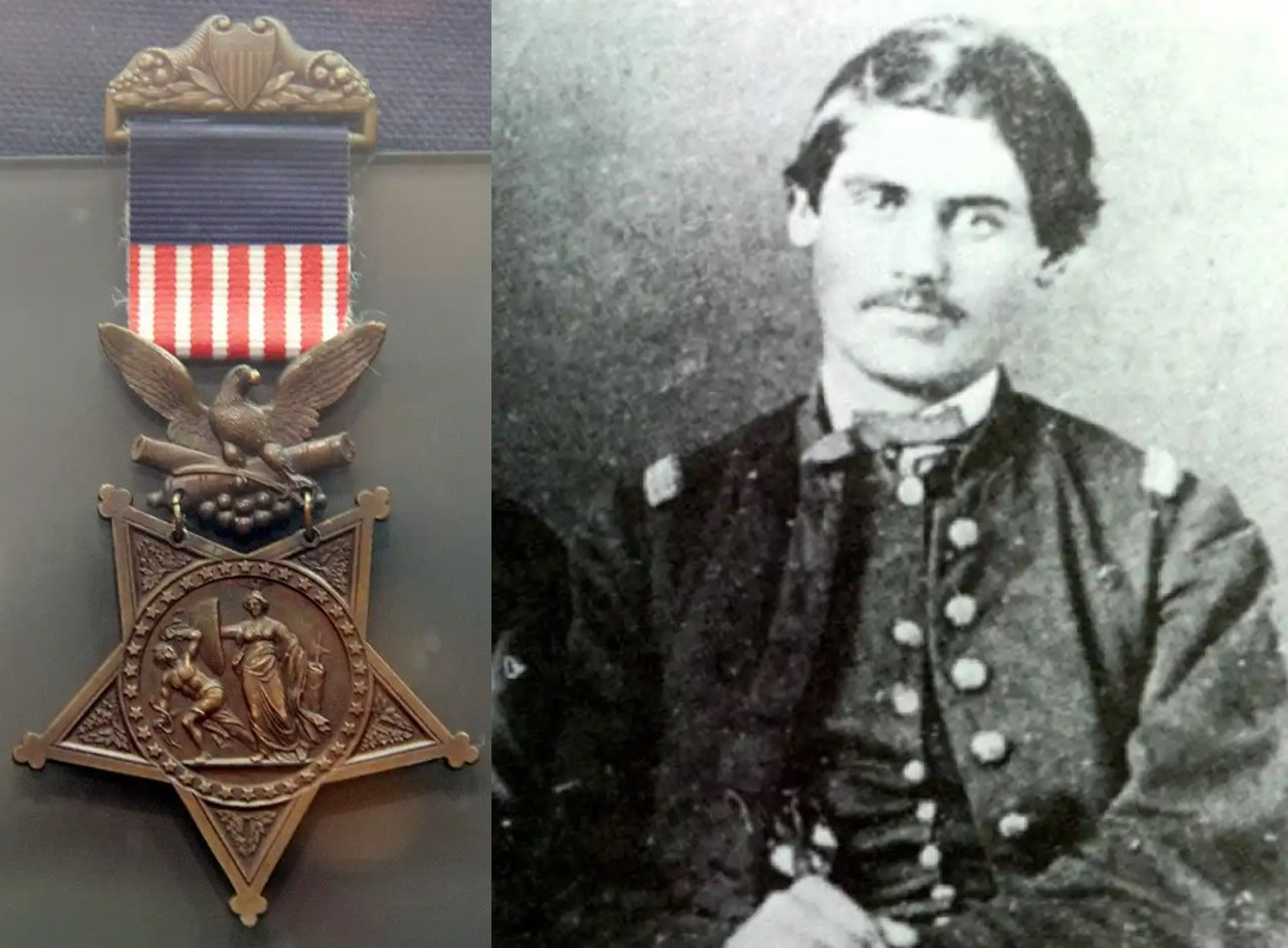
When Jacob awoke on the morning of April 12th the sky was still dark. He supposed he had never seen as many sunrises as a cabinet maker back in Fairfield County Ohio as he now regularly saw, but this morning was different. He was meeting some friends in Marietta, Georgia and couldn’t be late. They had a train to catch.
The train they boarded was bound for Chattanooga, TN, but would never arrive. Jacob and his friends—the other 21 men under the command of James J. Andrews—commandeered the train’s locomotive, named “The General,” its tender and three boxcars at Big Shanty, GA (a place now called Kennesaw) and began the Great Locomotive Chase.
Their mission was to destroy the rail and telegraph lines from Atlanta that kept the Union Army from laying an effective siege on Chattanooga. Leading their Confederate Army pursuers on an 87-mile, 24-hour chase north, Andrew’s raiders were forced to halt 18 miles from their objective, succeeding only in causing minor disruptions to the communications between the two cities.
Though it had little operational impact, the courage and daring of Andrew’s Raiders has captured the imaginations of Americans who know the story, which has been told and retold in books and movies. Moreover, nearly all of the soldiers who participated in the raid were awarded the newly-minted Congressional Medal of Honor, and Private Jacob Parrott of Ohio, the cabinet maker, was the first to ever wear one. Their award citation read:
One of 19 of 24 men (including two civilians) who, by direction of Gen. Ormsby M. Mitchell, penetrated nearly 200 miles south into enemy territory and captured a railroad train at Big Shanty, Ga., in an attempt to destroy the bridges and track between Chattanooga and Atlanta.
https://www.cmohs.org/recipients/jacob-parrott
161 Years ago this date, 17 February 1862, Massachusetts Senator Henry Wilson introduced a bill to Congress to provide for and Army Medal of Honor for “privates in the Army who distinguish themselves in battle.” Since that time the Medal of Honor has been awarded 3530 times, 19 times as a second award, to America’s most courageous Airmen, Soldiers, Coast Guardsmen, Marines, and Sailors. We often read their citations at awards ceremonies, or trainings, or any other time we are looking for inspiration.
There is no question that Medal of Honor recipients acted with honor and courage, but sometimes when we read of their exploits we believe ourselves incapable of acting with the same kind of courage. We tell ourselves, “I could never do that.”
As we head over the horizon on deployment into some of the most dangerous parts of the globe, it is a good time to think about being courageous, because it is hard to say what one might do when faced with a significant, consequential choice. But often these moments of decision captured in award citations are not simply one extraordinary moment, but the consequence of an accumulation of right choices. Though it may seem that courageous men and women are just lucky, Roman philosopher Seneca reminds us that luck is “what happens when preparation meets opportunity.”
In the small choices that we make every day we have the opportunity to be courageous or cowardly. Do we choose what we know to be right, or do we choose the easy thing? Courage, like a muscle, will only grow strong if it’s exercised. If we make tough choices while they are still small, then the bigger ones won’t be so hard to make. The more we practice being courageous, the easier it will get, so that when we really need to, we can do it. We don’t want to miss our opportunity by being unprepared. Let’s not miss the train.
LET US PRAY
Heavenly Father, there are many situations in life that make us afraid, our relationships, our work, our families, the things we can’t see that are lurking over the horizon. We fear that things may not go well and that we may not be up to the task. Give us the strength to do what is required today and to cultivate courage in each choice we make. Assure us of Your presence always so that, thus encouraged, we may rise to every challenge we will face throughout this deployment and beyond, for You are holy always, now and forever, and to the ages of ages.
AMEN
 An Orthodox Priest Abroad