Destroyers rose to naval prominence during the fight against submarines in the Second World War, and one of their primary missions remains defending the fleet from the threat of submarine attack. It is a proficiency all escort ships (CRUDES, in US Navy parlance) must demonstrate before departing for an extended deployment. Lately in an era of asymmetric threats, it sometimes seems an antiquated skill, but even Iran operates submarines now. Subs are platforms that give small navies the ability to punch above their weight class. I have always found compelling the stories of sub captains surfacing their ships because they thought sneak attacks were cowardly. It makes me wonder how far we’ve come in successfully dehumanizing warfare. For the young men and women who man our Navy, there isn’t much now to distinguish the video games they play from launching a lethal weapon that will destroy human lives, except that the video game’s graphics are better. So, I believe it’s good to remind them, not just about the history, but about what they are training to do, and that having honor and being honorable—and knowing from Whom honor flows—is the best defense against moral harm. It is one way that the Truth will set you free.
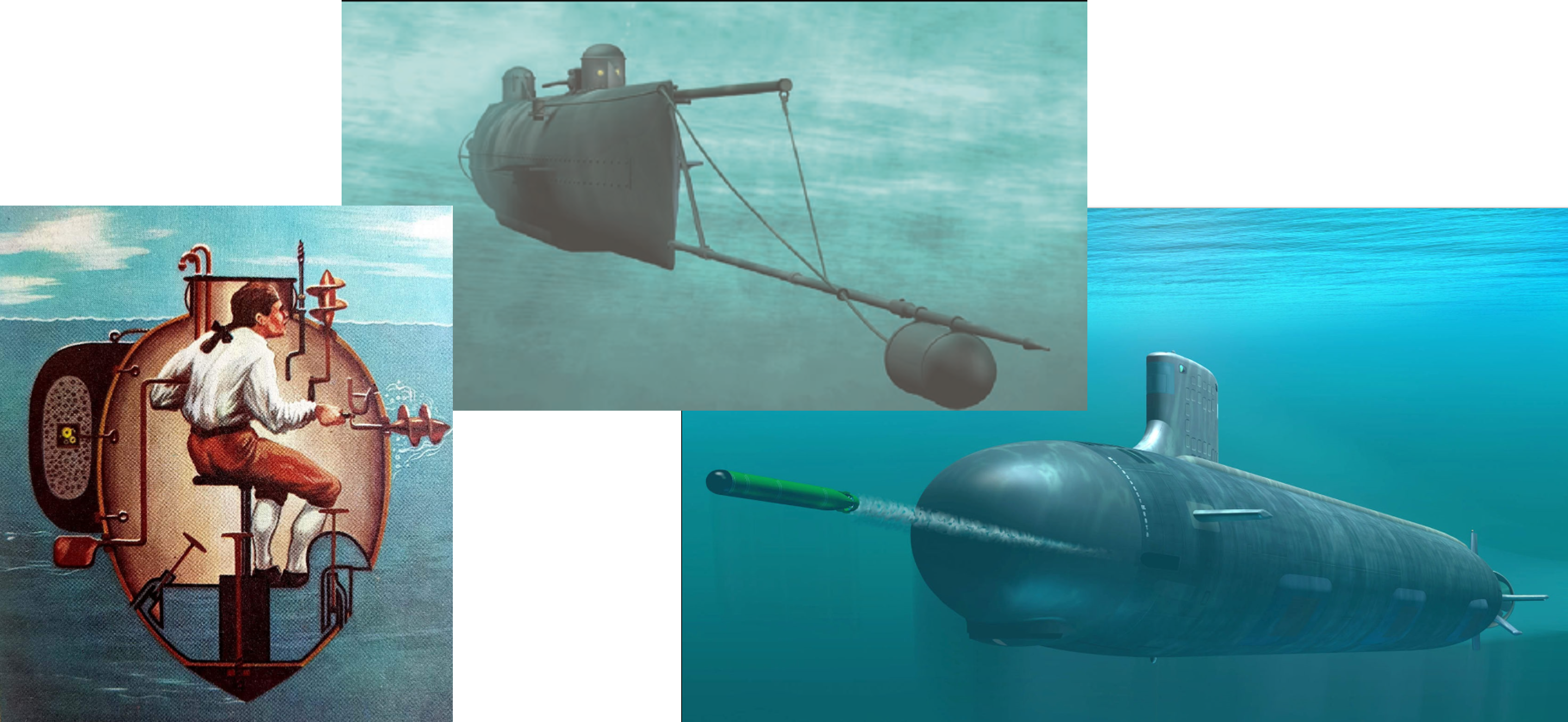
Be who you say you are.
Early in the morning of February 17th, 1864, the CSS Hunley slipped her moorings and headed out into Charlestown Harbor. It had been nearly 100 years since anyone had tried what the Hunley’s crew were attempting, and her eight-man crew was hopeful that they would be more successful than the one-man crew of the Turtle had been during the War for Independence. Given that the Hunley had already sunk twice, killing 13 of her own crew, the men could be forgiven if they had had some doubts.
Doubts or not, they hand-cranked the shaft that turned the small screw propelling them towards their target: the USS Housatonic, on blockade duty at the entrance to the harbor. Moving quietly and with only her small conning tower showing above the surface, the Hunley eluded the Housatonic’s lookouts, who were completely unprepared for this new, unconventional threat. She succeeded in attaching an explosive mine to Housatonic’s hull, and thus became the first submarine in history to sink an enemy ship.
Her crew would be unable to celebrate their unique victory, however. The same explosion that doomed the Housatonic also sent the Hunley to the bottom with all hands, displaying at once the lethality of submarines and the risks of operating them.
These past few days of sub-hunting we’ve been doing got me to thinking about submarines and their history. Although she was the first, the Hunley was not the last submarine to sink an enemy ship, but submarine warfare was never widely accepted until the Second World War. Technical difficulties were partly to blame—designers had to figure out how to make the boats more dangerous for enemies than for their own crews—but even after most of these troubles were surmounted most nations were still slow to accept unrestricted submarine warfare because they believed it was dishonorable to attack an opponent without warning. In fact, submarine skippers in World War One were known to commence their attacks on the surface so that the defending ships would not be taken unawares. This, they felt, was a demand of the rules of honor.
Honor is one of our Core Values, and it has an interesting history of its own. From time out of memory and spanning all societies there has always been some kind of code of honor governing the actions and interactions of mankind. The concept of honor is a human universal, but it has only been recently, and only in Western societies, that honor has come to mean, in large part, that you are who you say you are. Which is one reason why international law requires flying your own nation’s flag before firing on an enemy, and made submarine warfare a difficult thing to accept.
So today I think it’s a good time to ask ourselves if we are who we say we are. Do we allow honor to govern our interactions, speaking honestly and openly, never lying or misrepresenting ourselves? Do we claim only our own work and give credit where credit is due? Are we diligent in doing our duty?
In short, do we have honor? We took an oath that we would, our core values say that we do, so let us strive each and every day to live a life of honor.
LET US PRAY
Heavenly King, teach us to always conduct ourselves with honor, integrity, and sincerity. Help us to be the man or woman that we say we are, and the person You would have us to be. Teach us to act firmly and wisely without embittering or embarrassing others. Grant us the integrity to live up to our core values, for you, O God, are the source and ground of honor, and it is You we ask, and in Your name we pray.
AMEN
 An Orthodox Priest Abroad