There are stretches on every deployment where the days become routine and repetitive. Standing the same watches, seeing the same things, doing the same maintenance, and you begin to lose track of which day of the week it is. Or at least, you would if there weren’t tacos served on Tuesday. Especially young people who probably did not join the Navy to do the same job every day, it can be difficult to maintain focus. This story, I hoped, aside from being just an amazing tale, illustrated the importance of taking even the most mundane job seriously and doing it well.
Do everything as if your life depends on it.
On the night of August 8th, 1942, the heavy cruiser USS Astoria patrolled the waters off the coast of Savo Island in the Solomons archipelago. She was part of a task force supporting and protecting the Marines’ landing, which had met with success initially when they’d caught the Japanese by surprise. However, the Imperial Navy had no intention of giving up any of the Solomon Islands.
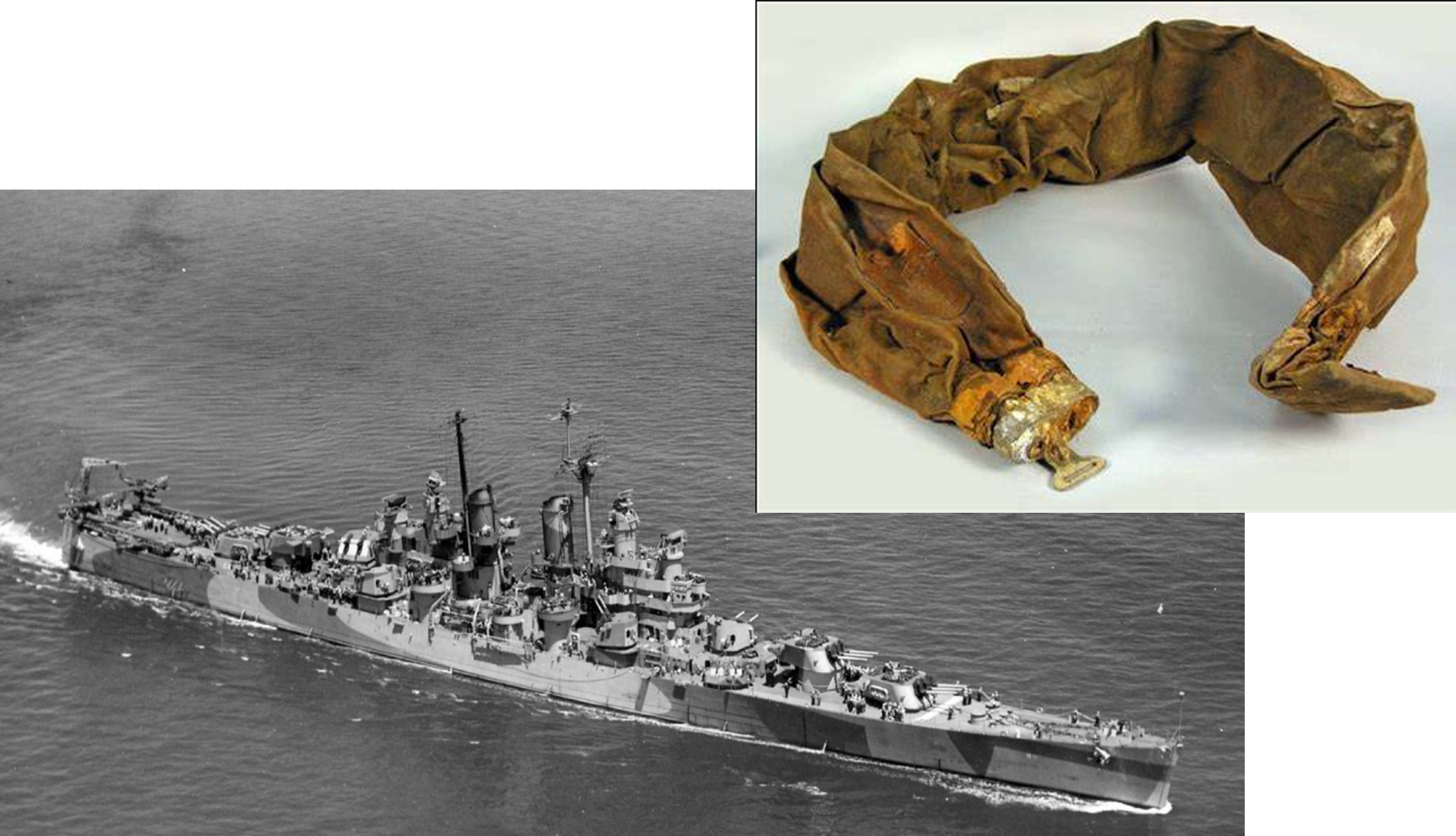
At 0144 the Japanese counterattack arrived at the Astoria. The ship was spotlighted to make it an easy target for the Japanese cruisers that gave Astoria a vicious, merciless pounding. Signalman 3rd Class Elgin Staples was at his general quarters station near Astoria’s number one 8-inch gun turret when it took a direct hit and exploded, blowing Petty Officer Staples overboard. With his legs riddled with shrapnel he was unable to swim and might have drowned had he not been able to activate the inflatable life belt fastened around his waist.
The belt kept him afloat long enough for him to be picked up by the destroyer USS Bagley on its way to assist the Astoria. When, unfortunately, Bagley was sunk from underneath him, his life belt again kept him floating until he was rescued a second time by the transport ship USS President Jackson, which evacuated the wounded Sailor to New Caledonia, an island off the east coast of Australia.
When finally in safer waters aboard the Jackson, Staples took off his life belt and examined the device that had twice saved his life. It had been manufactured by the Firestone Tire and Rubber Company of Akron, Ohio, the city he called home. He decided he’d have to take the thing home to show his mother, who worked at that very factory.
Back in Akron for convalescent leave, he finally shared with his mother the story of his harrowing ordeal in the Solomon Islands, and showed her the belt that had saved his life. “Look, Mom,” he said, ”it was made right here in your plant.”
His mother took the belt in her hands and examined it, noting the number etched into its metal label. When she looked up her eyes were wide and the color had drained from her face. In a voice barely above a whisper she said to her son, “I’m an inspector at Firestone. This is my inspector number.” She had certified the life belt that had saved the life of her son.
We never know how the things we do, the equipment we maintain, repair, or inspect may end up helping—or even saving—someone today, tomorrow, or down the road. This applies not just to equipment, but to relationships too. We must never settle for second best, or allow our work or how we treat each other to be just good enough. Elgin Staples lived to be 86 years old because his mother took seriously her boring and repetitive job. In our line of work, especially, we must always do what’s right and act with honesty and respect towards each other, because someone—maybe even yourself—is depending on it.
LET US PRAY
Lord, we thank you for being a constant and never-failing source of strength and peace. For us who are tempted sometimes to just let things slide by, give us the strength to remain steadfast in our duties, even when we’re tired and feel unappreciated. Help us to do all that we can do with the proper care and the commitment to always do our best for each other and for our ship, for You are a faithful God, and You are holy always, now and forever and to the ages of ages.
AMEN
 An Orthodox Priest Abroad