I found it quite exciting to write about the history of places that we were sailing in and around, and I hoped that others would also find it so. I don’t remember many conversations after this particular prayer, but I did notice an increase in the use of the term described herein. It gave me hope that they were indeed choosing their battles wisely.
Choose your battles.
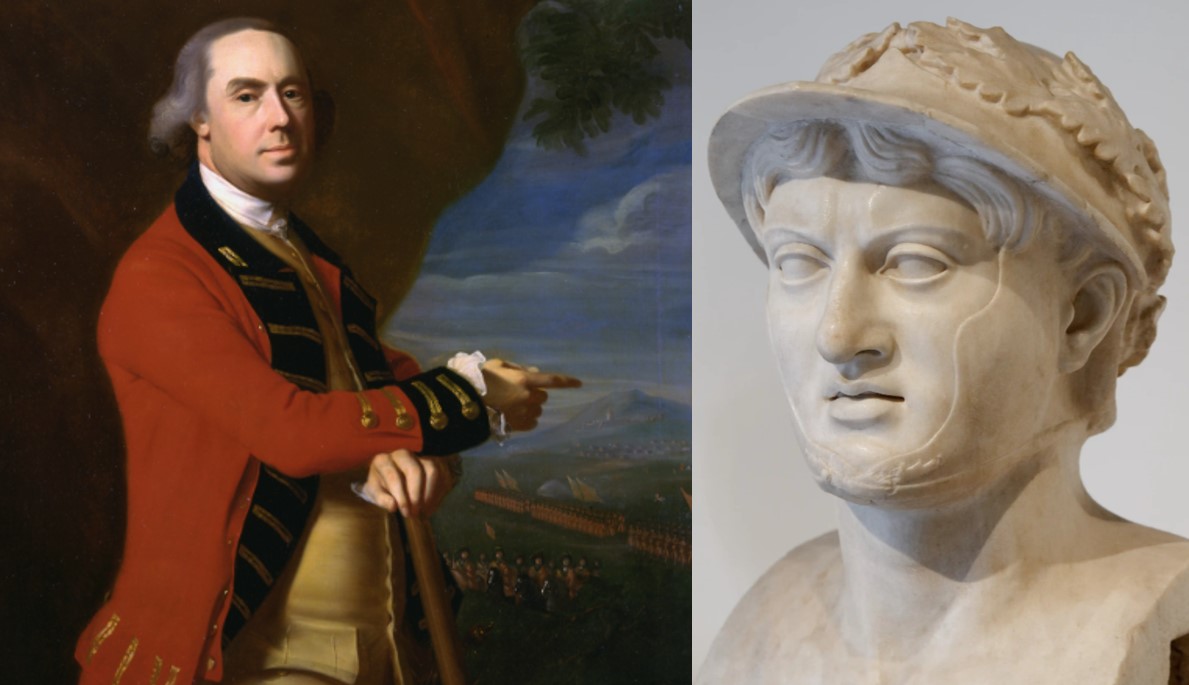
In the ancient Greek kingdom of Epirus, on the western coast of Greece, there lived a king named Pyrrhus. Pyrrhus was an ambitious king who loved the sounds of swords clashing and bow stings twanging in battles of conquest. He longed to be as renown for conquest as was another Greek king named Alexander, so he set his eye across the Ionian Sea to Italy.
Against the best advice of his best advisors, Pyrrhus sailed to challenge Rome for control of its home peninsula. The Roman army marched out to meet him and was defeated at the battle of Heraclea, but it was a costly victory for the Greeks. Pyrrhus lost more than 30% of his army in the battle. But he wasn’t finished.
Still thirsty for conquest, he pushed closer to Rome, but by now the Romans had formed alliances so that the Greeks under Pyrrhus now faced three armies instead of one. Undaunted, Pyrrhus pressed on and met the Romans again at the battle of Asculum, where the Greeks were again victorious, but at an even higher cost. This time Pyrrhus lost nearly half of his army in battle. Surveying the field at the conclusion of the fight, the conqueror said “If we are victorious in one more battle with the Romans, we shall be utterly ruined.”
It is from this campaign that we have the expression “pyrrhic victory,” which as you just learned is a victory that inflicts such a devastating toll on the winner that it is little better than defeat. We have an example of this in our own history at the Battle of Bunker Hill. In the early stages of the American Revolution the Continental Army lost that hill, but it cost the British Army so much to take it that we still celebrate the battle. In fact, there’s a monument in Boston where it was fought, and the Navy has named both an aircraft carrier and a guided-missile cruiser after the battle. Bunker Hill was a pyrrhic victory for the British Army.
Pyrrhic victories, then, are bad. It’s a principle my mom would describe as “cutting off your nose to spite your face,” and it applies in all aspects of life. Every day we encounter some kind of conflict and we are forced to make a decision: Is this a battle worth fighting? Even if I win the fight, would it cost me more than I’d lose if I hadn’t fought at all? Can I afford to pay the cost of victory? Or would it be a pyrrhic victory? Don’t ever cut off your nose, your face will thank you.
LET US PRAY
Almighty God, help us to discern the battles we must fight from those that we might sidestep. Give us the strength to fight the good fights and the grace to avoid risking a pyrrhic victory. We thank You that in Your grace we can become more than conquerors, for You are the God of Strength and peace and to You we give glory, honor, and worship, now and forever and to the ages of ages.
AMEN
 An Orthodox Priest Abroad