Sailors are encouraged to have a questioning attitude. It may be that a particular Sailor is the only one who sees a threat or an impending mistake, and it is imperative that he or she is free to speak up and ask the question. No matter how questioning is encouraged, however, it is often the case that responses to questions are felt by the questioner as demeaning or judgmental—whether or not the response is intended that way. So, it becomes more and more difficult to get young people to ask questions. I hear far too often how someone was turned off of faith and religion because people didn’t like their questions. While it is a fact that truth is often difficult to hear and can be felt as a negative response, it does no good to blame the questioner, and we better be certain that we aren’t discouraging the questioning. Because the Truth has no fear of examination, and inquisitiveness must be encouraged, for it is in the questioning, and in the resulting conversation, that we develop our relationship with the Truth.
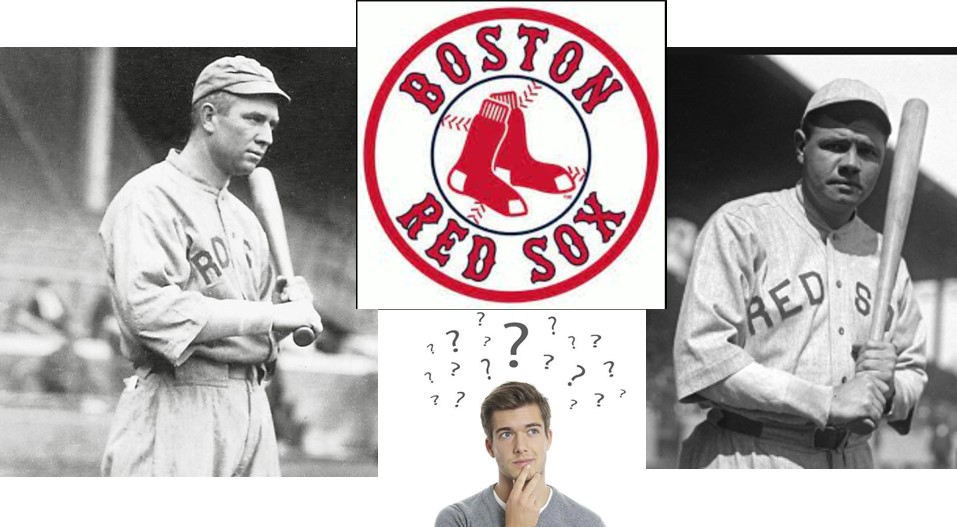
Of curses and questions.
It may already be forgotten, given their success this century, but until the Boston Red Sox finally won a World Series in 2004—their first in over 85 years—fans believed that they were unable to win one because of a hex they called the “Curse of the Bambino.”
Before he became famous as a New York Yankee, Babe Ruth—one of whose nicknames was “the Bambino”—was a member of the Red Sox. After the 1919 season, Red Sox Owner Harry Frazee sold Ruth’s contract to the Yankees. Soon after the transaction the Yankees rose from also-rans to perennial powerhouse, largely due to Ruth’s bat. The Red Sox went in the opposite direction.
The “Curse” as the cause of Boston’s long tail of woe is a tale that can only be cobbled together after the fact, however. In 1919 Red Sox fans were far less likely to blame the Babe Ruth deal for the team’s demise than they were another trade that took place three years earlier. It was the deal that sent center fielder Tris Speaker to the Indians in Cleveland. The Sox, needing to cut salary, wanted Speaker to take a 40% cut because his batting average had dropped from 0.338 to 0.322 that year. When he pointed out that the drop only moved him from 3rd to 4th best average that season, and refused to sign such a steep cut in pay, he was traded.
It is true that Ruth went on to become baseball’s greatest slugger, but when he was sold to the Yankees he had only collected in his six total seasons 10 hits more than Speaker had had in just his final season with the Red Sox. Tris Speaker wasn’t only a great hitter (only four men have had more career hits than he had) he was also a great fielder. He was so quick and fast as a center fielder that he would play in short center field, almost as a 5th infielder.
That was where he was standing in the seventh inning against the White Sox when Shoeless Joe Jackson reached on a single that advanced Chicago second baseman Eddie Collins to second. With two men on and only one out and light-hitting Happy Felsch at the plate, the White Sox manager started his runners with the pitch, hoping that the hit-and-run would help his batter and keep him out of a double play. It backfired. Felsch hit a line drive straight to Speaker behind second who caught the ball and was able to beat Collins back to second base to complete an unassisted double play—an extraordinarily rare feat for an outfielder. It was the second time that year that he had done it, and he would finish his career having done it six times. No other outfielder in Major League history has more than two.
Though the Red Sox won two more World Series after they traded Tris Speaker, they won fewer and fewer games each year after the trade until they had their first losing season in more than a decade in 1919. That was the season they sent Ruth to New York. So, blame the Bambino if you like, but sometimes the actual answers lie a little bit deeper, so make sure you’re asking the right questions. In baseball AND in life, the truth will always elude you if you settle for easy answers.
LET US PRAY
Lord God, we often miss the truth because we are afraid to ask the right questions. Sometimes we don’t even know which questions to ask. Give us the courage to ask questions, even when—especially when—we fear the answers. Help us never allow our pride to keep us from asking questions. Teach us to expect each question we ask to produce additional questions as well as answers, for this is a sign that we are asking good questions. We thank you for giving mankind the curiosity that drives us to use that gift in ways that are profitable to ourselves and to others, for You are the giver of all good things and You are holy always, now and forever, and to the ages of ages.
AMEN
 An Orthodox Priest Abroad