By this time in the deployment we were heading west, towards home, but still had to drive through some of the most dangerous seas on earth around the Arabian Peninsula. Trying to stay focused while both excited to be going home and fearful of what may lie ahead is tough, even for those who have been there before. Not all of our Sailors have. This particular prayer I got a little preachier than I usually do because I felt the subject matter gave me the latitude. It is historical fact that we were once proudly a nation under God. We still are that, even if as a nation we are no longer mindful nor proud of the fact. The results have been predictable, even if we deny that too. My job as the crew’s chaplain is to give them hope, and I can think of no greater source for that than the Almighty Creator of the Universe who loves each and every one of them. They deserve to know that.
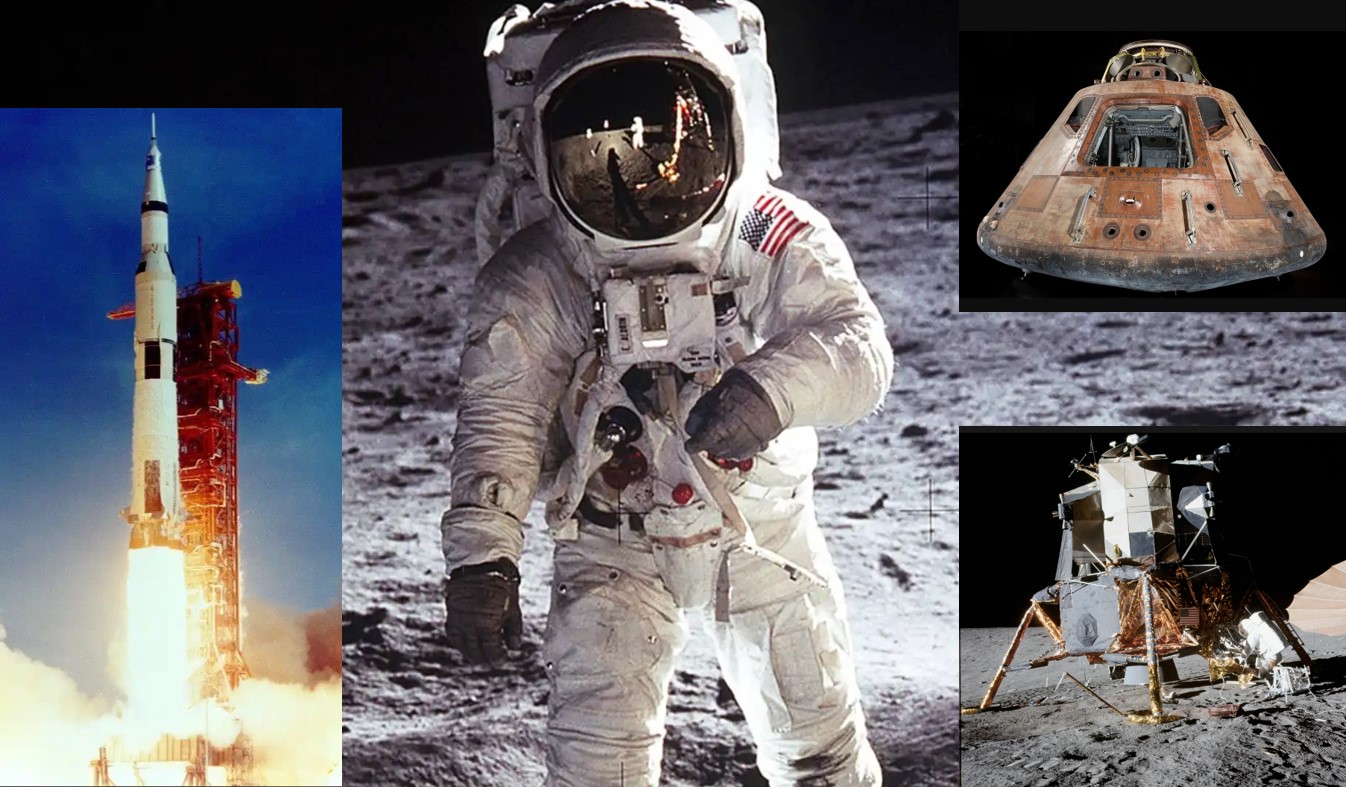
The Eagle Has Landed.
Ed was born near Montclair, New Jersey, and grew up there with his two older sisters. His father had flown for the Army in World War One, and after the war had left the service and begun working as an executive at Standard Oil Company. Ed did well in school, both academically and as an athlete. He was the starting center fielder for Montclair High School’s championship team in 1946. Using his connections from the Army and as an executive, Ed’s father managed to secure for him an appointment to one of the U.S. Military academies, but rather than attend the U.S. Naval Academy as his father had wished, he became a cadet at West Point.
When he graduated at the top of his class, he chose service with the Air Force, which had been formed as a separate service while he was a student and hadn’t yet established its own military academy. He wanted to fly. And so he did: 66 missions flying F-86 Sabres in Korea, during which he shot down two enemy MiGs and earned two Distinguished Flying Crosses and three Air Medals.
After the war, the Air Force sent him to MIT where he earned a doctoral degree in astronautics. You would have thought that this achievement, combined with his military record, would have made him a shoe-in to join NASA’s brand-new manned space program, but they rejected him. They wanted test pilots. He reapplied the following year, and because NASA had realigned their requirements, this time he was accepted, becoming the first astronaut with a doctoral degree.
Ed first made it into space as part of the final Gemini mission, Gemini 12, and would return as part of the Apollo program. On July 16, 1969, Ed and two others climbed aboard their Saturn V rocket and blasted off as the Apollo 11 mission. Their command module was named Columbia, an homage to the cannon in Jules Verne’s novel From the Earth to the Moon that shot the fictional astronauts’ capsule like a cannonball straight to the moon. Apollo 11’s Columbia would take its occupants there too, even if the launch was only slightly less violent, and more self-propelled.
When they reached lunar orbit, the lunar landing module—named the Eagle—carried Ed and his pilot the rest of the way to the moon’s surface. After they landed, Ed radioed to Earth and said, “I’d like to take this opportunity to ask every person listening in…to pause for a moment and contemplate the events of the past few hours, and to give thanks in his or her own way.” He then withdrew from his spacesuit a kit that his pastor had given him, and he received Holy Communion, privately—but meaningfully—celebrating the first known extra-terrestrial religious service.
Most people remember the lunar landing module pilot, Neil Armstrong, who took mankind’s first steps on the moon. Fewer remember his teammate Ed, who by then had come to be known by a nickname his sister gave him when she couldn’t quite pronounce the word “brother.” It came out sounding like “buzzer.”
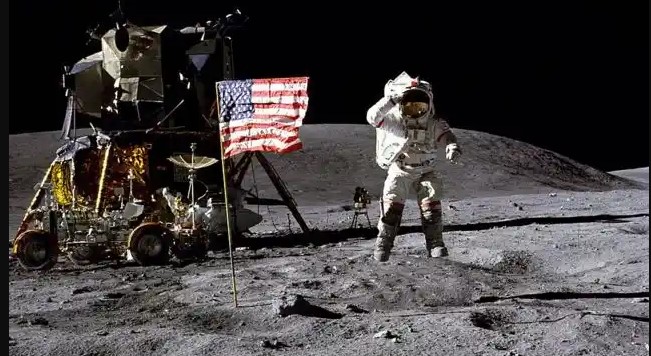
Buzz Aldrin is a man with an exceptional scientific education and broad worldly experiences who also had a deep and profound faith in God. 54 years ago today he landed on the moon. There are only two kinds of countries in this world: those that use the metric system, and one that’s been to the moon. Buzz Aldrin was one of the courageous men who took us there, and in the process grew even deeper in his faith. On the return trip to Earth, Buzz read to the world from Psalm 8, “When I consider thy heavens, the work of thy fingers, the moon and the stars, which thou hast ordained; What is man, that thou art mindful of him?”
God is mindful of each of us. He who created the vastness of the universe knows each and every one of us by name, and He is with us whether we’re at home, the opposite side of the planet, or on the moon. As He is mindful of us, let us be mindful of His constant presence and allow His peace to accompany our way.
LET US PRAY
Almighty God, even though I walk through the valley of the shadow of death I will fear no evil, for You are with me. Your rod and Your staff comfort me.[1] Where can I go to escape Your Spirit? Where can I flee from Your presence? If I ascend to the heavens, You are there; if I make my bed in hell, You are there. If I rise on the wings of the dawn, if I settle by the farthest sea, even there Your hand will guide me; Your right hand will hold me tightly.[2] Lead us tonight, Lord, as we transit dangerous waters. Hold us in Your hand of protection and keep us safe tonight, and for the rest of our journey home, for You are a Good God who loves Mankind, and to You we give glory, thanksgiving, and worship, now and forever, and to the ages of ages.
AMEN
[1] Psalm 23
[2] Psalm 139
 An Orthodox Priest Abroad