This one is a little later than the date it was originally given, but close enough to still work. I updated a few things. It was a bit of a stretch for me because I don’t know much about tennis. In fact, growing up I can only remember being aware three tennis players, John McEnroe (though more for his temper than his game), Andre Agassi (though more for his hair than his game), and this guy:
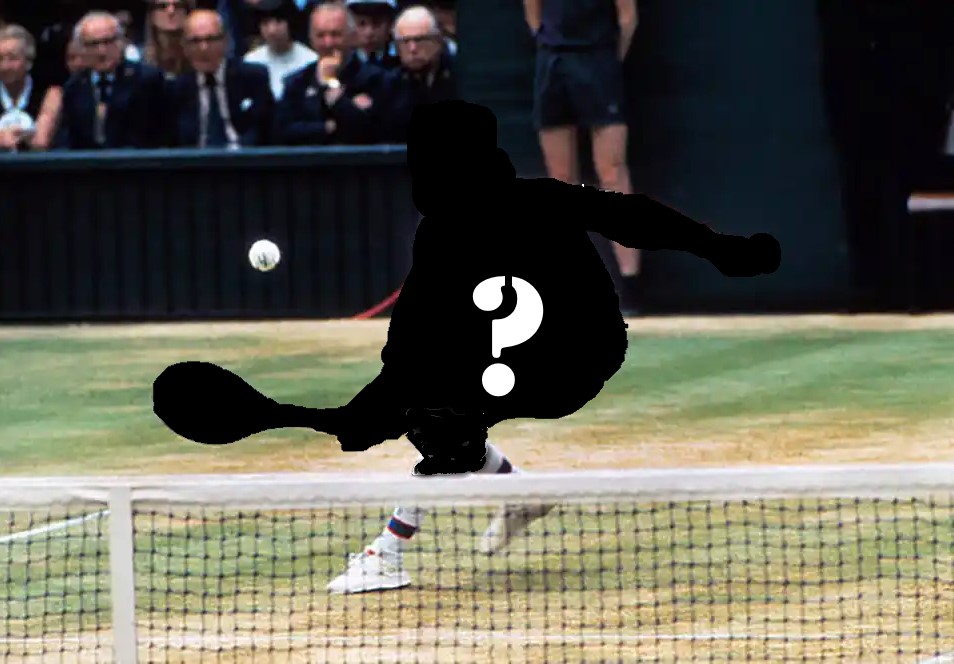
He was seven years old when he first started swinging a racket. His father worked for the Richmond Recreational Department, which provided his family a cottage in which to live on the grounds of Brookfield Park. There were tennis courts there that the boy could use whenever he wasn’t in school or studying.
A local tennis star saw him play, and—recognizing his talent—connected him with Dr. Walter Johnson, a professional tennis coach who would shepherd the young talent through his entire career. It was Dr. Johnson who arranged for the boy to move from segregated Richmond to St. Louis, where a young black man could use indoor facilities and compete freely.
He joined the UCLA tennis team in 1963, and while there also joined the Army ROTC, entering active military service when he graduated in 1966. He was assigned to the US Military Academy at West Point, where he worked in an office and coached the Army Tennis Team. It was while he was on active duty that he became the first black man to win the U.S. Open, which is why—because of his amateur status—he had to pass on the $14000 prize. He would also become the first black man to win both the Australian open and Wimbledon, but even after all of his accomplishments he was still prevented from playing in the South African Open by its Apartheid government.
It was about this time that the athlete started getting more involved in battles off the court. He joined Athletes and Artists Against Apartheid, he wrote a heavily researched history of African-American athletes, and because of his own heart condition became a spokesman for the American Heart Association. His hereditary heart condition prompted two separate heart bypass surgeries, and it was during the second that a tainted blood transfusion infected him with the HIV that would ultimately claim his life on February 6, 1993 when he was only 49.
The year he died, President Bill Clinton posthumously awarded him the Presidential Medal of Freedom, and the U.S. Open stadium now bears his name. His statue now stands on Monument Avenue in Richmond, a place where as a boy he couldn’t even visit because of his skin color.
Tonight in observance of Black History Month, and on the 30th anniversary of his death, we remember the legacy of Arthur Ashe, Jr. May he rest in honored peace, and may his memory be eternal.
LET US PRAY
Lord, we know through your servant David that there is nothing so good and so pleasing as for brothers to dwell together in unity. We thank you for men of strength and character like Arthur Ashe who have shown us by their lives just what that might look like. Teach us to learn from their examples. We pray you would grant rest to his soul where the righteous repose, and for us grant peace. O God, You are the Father of all mankind and it is You we must ask for mercy and forgiveness when we fail to live as brothers. Teach us to love as You love, for You are holy always, now and forever, and to the ages of ages
AMEN
 An Orthodox Priest Abroad
Thank you for your posts. I enjoy reading them.
LikeLike
Thanks, Liz, I’m pleased you do. Feel free to share them with anyone else whom you think might also enjoy them.
LikeLike