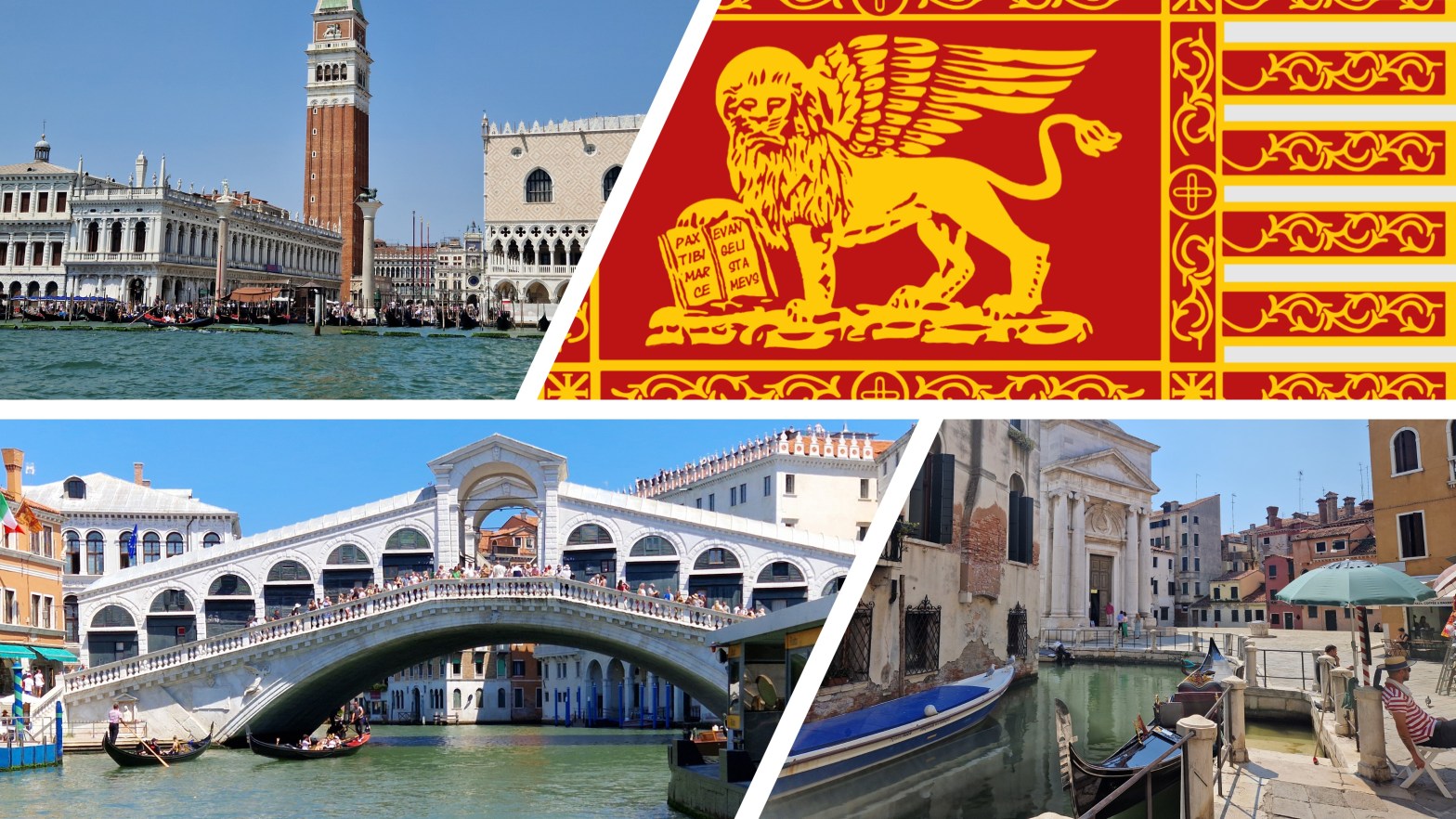
When we were preparing for their arrival, Nora and I kept asking my parents what they wanted to do or see while in Europe. We entertained ideas of short trips to other countries—Mom wanted to go to Corfu in Greece—but we all settled on staying within Italy. Less time in transit, more time exploring. What finally bumped the other trips off the list was that dad wanted to go to Venice.
Venice is a city comprised of 126 interconnected islands in the middle of the Venetian Lagoon, but one can still get there on a train. Our train arrived at midday, and we immediately began the long, hot walk to the Airbnb we’d booked on the other side of town. We stopped frequently along the way for photographs, once for lunch, and once for gelato.
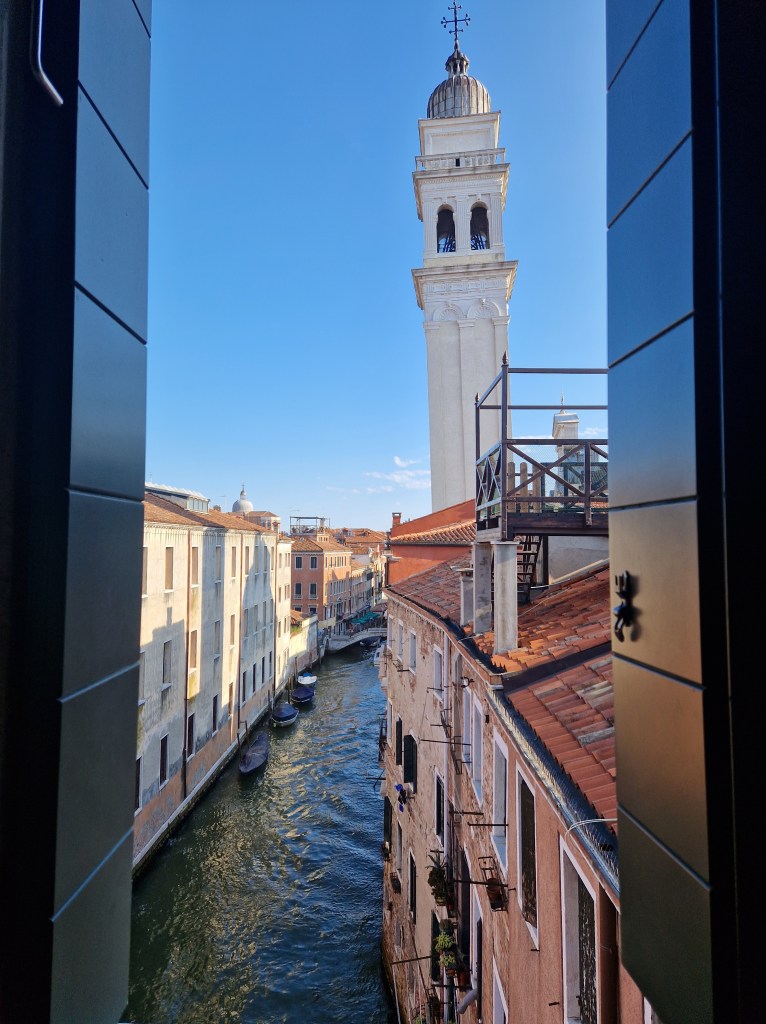
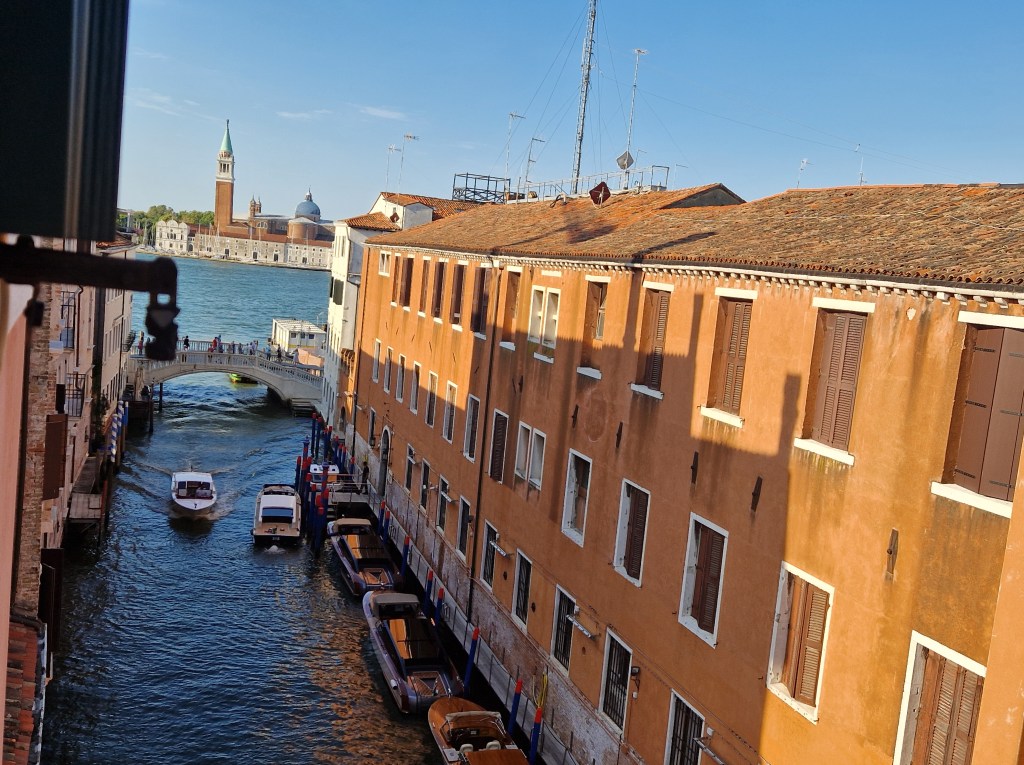
Walking through Venice was an amazing adventure by itself. I, like most people, know that Venice has lots of canals, but I hadn’t realized just how many there are. Those 126 islands are like city blocks but divided by water instead of streets and avenues, requiring bridges rather than crosswalks for pedestrians to traverse. We had to cross thirteen arched bridges of various sizes between the train station and our Airbnb!
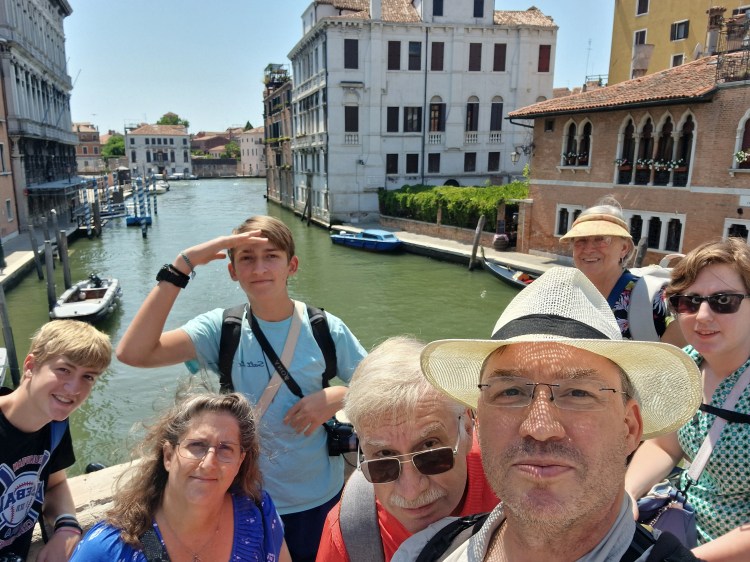
At the foot of the second bridge, we stopped for lunch at the Queen Restaurant, which provided an air-conditioned rest and good food. It was a small place though, so we were a little crowded with our backpacks. The food was delicious, and the service was attentive and spoke English.
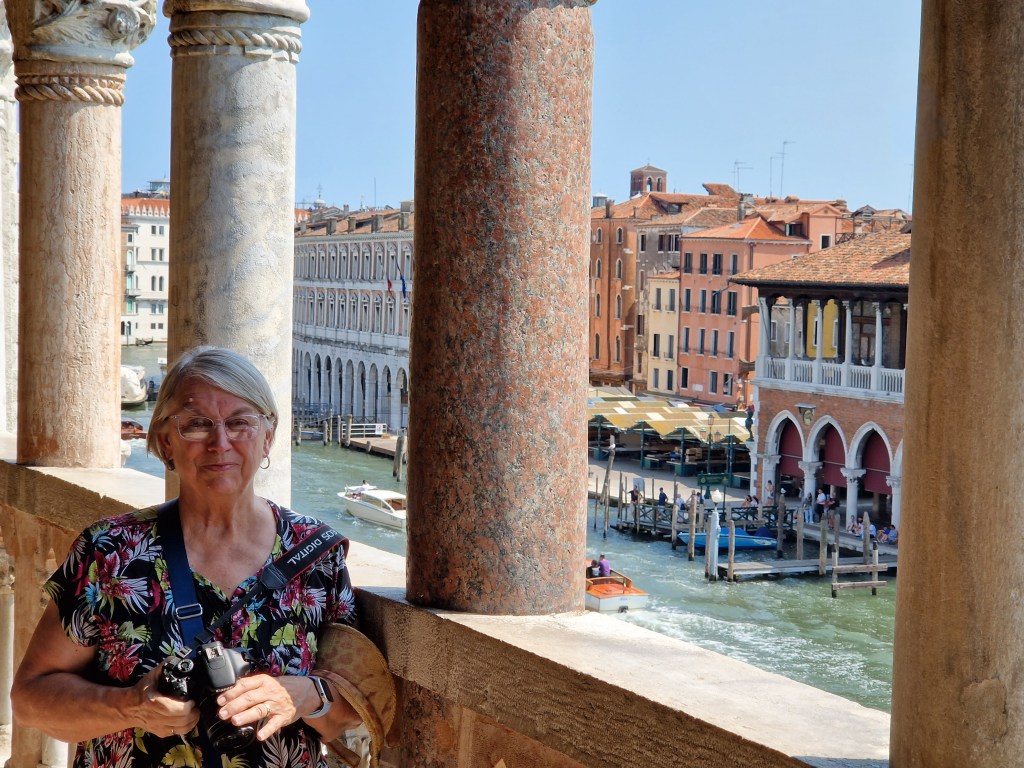
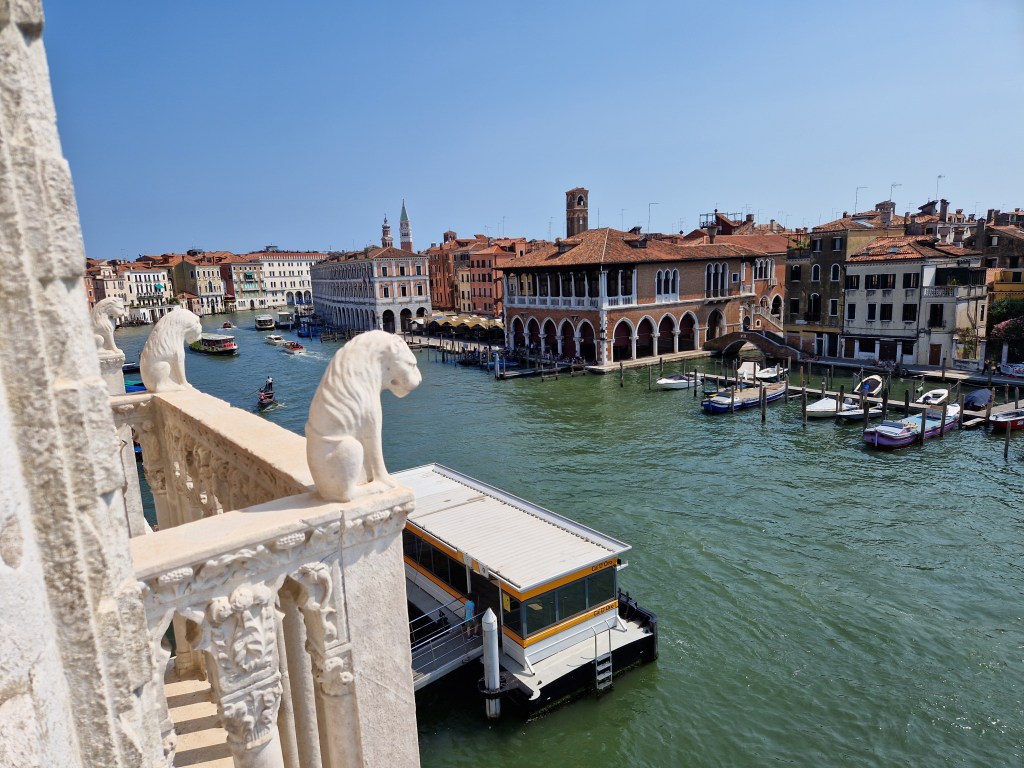
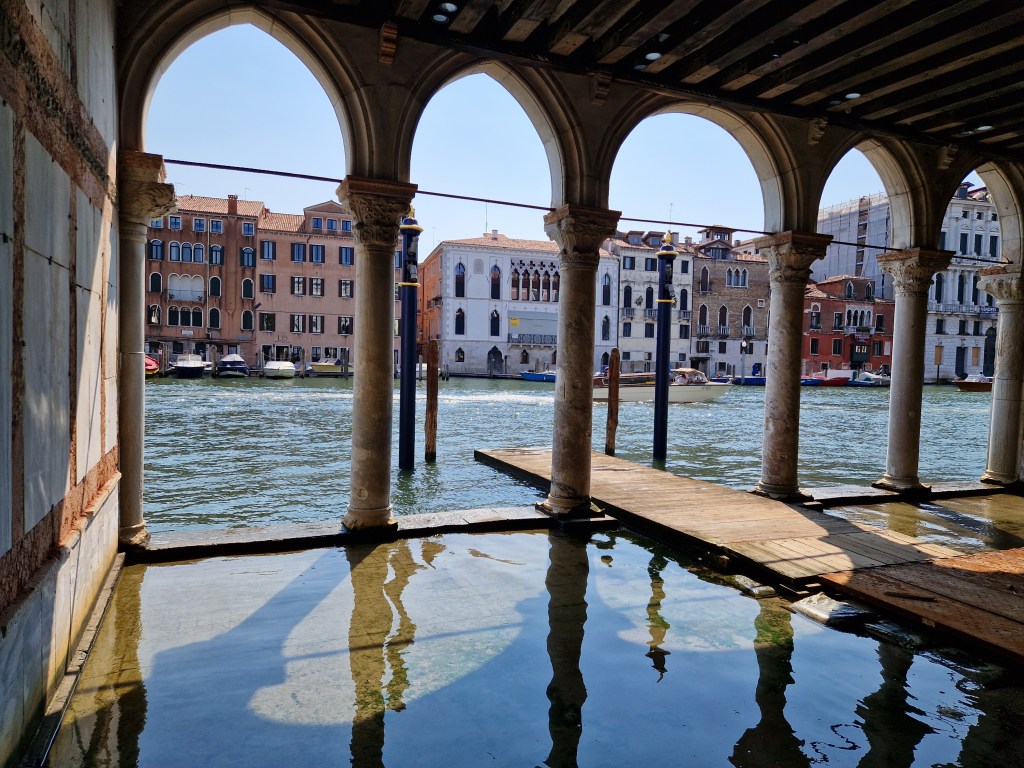
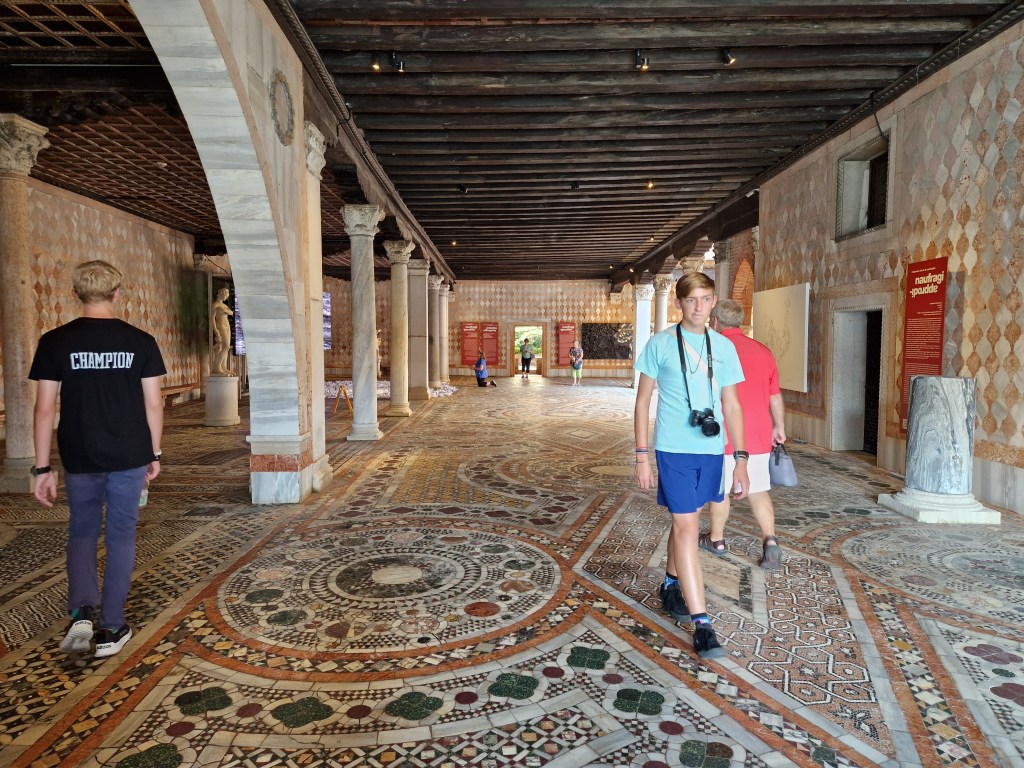
After lunch we had some time before our check-in, so we visited our first Venetian museum: The Galleria Giorgio Franchetti at the Ca’ D’Oro. This small gallery is in a historic building on the Grand Canal, so in addition to beautiful art, we got our first real gaze at Venetian architecture and the Grand Canal. The art was beautiful, of course, but so was the house itself which is a palace built between 1428 and 1430. Its appointments include beautiful mosaics on the ground floor.
By the time we got to our lodging we were all exhausted. I took dad and the boys with me to a local grocer to stock the apartment larder. Our plan was to have breakfast and dinner most evenings at the apartment. In addition to saving us some money—restaurants in Venice are pretty pricy—eating in the kitchen gave us family time free of distraction, which was a special treat. It worked out to be a good plan, and the restful evenings kept the hectic day trips manageable.
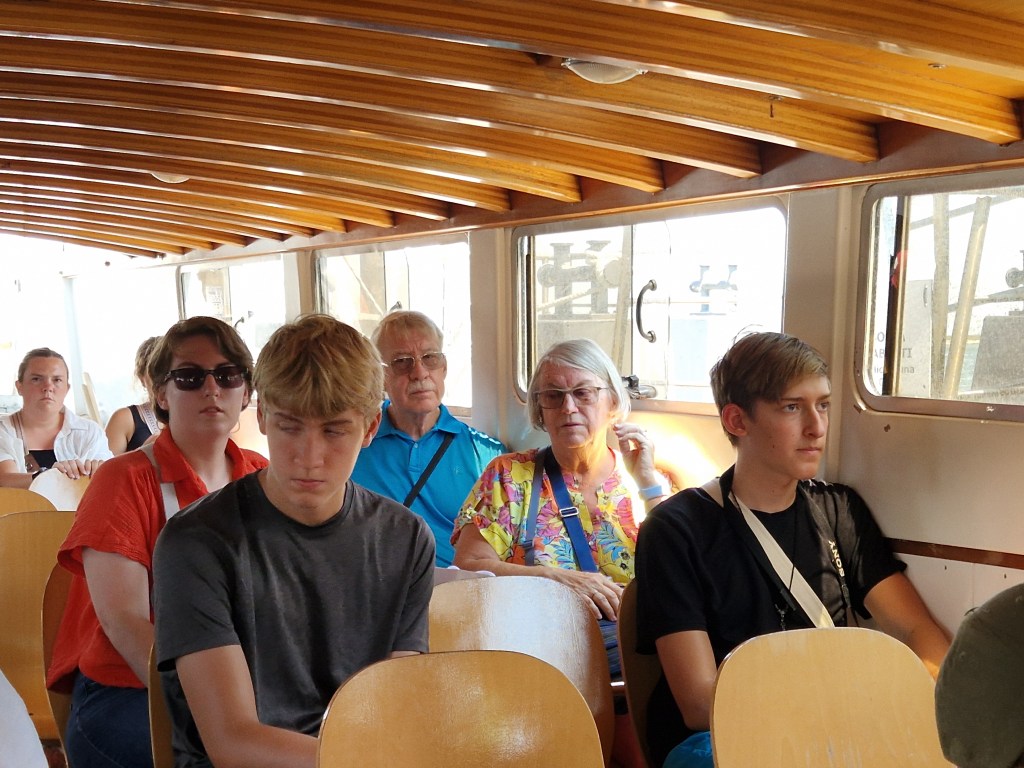
The first full day of exploration began with a relaxed morning breakfast before walking to a pier near the piazza San Marco to catch our boat tour. The three-island tour we’d planned would take us across the lagoon and last about four hours. We embarked, and after a stop on the other side of the Canal to pick up a few more passengers we were off to Murano.
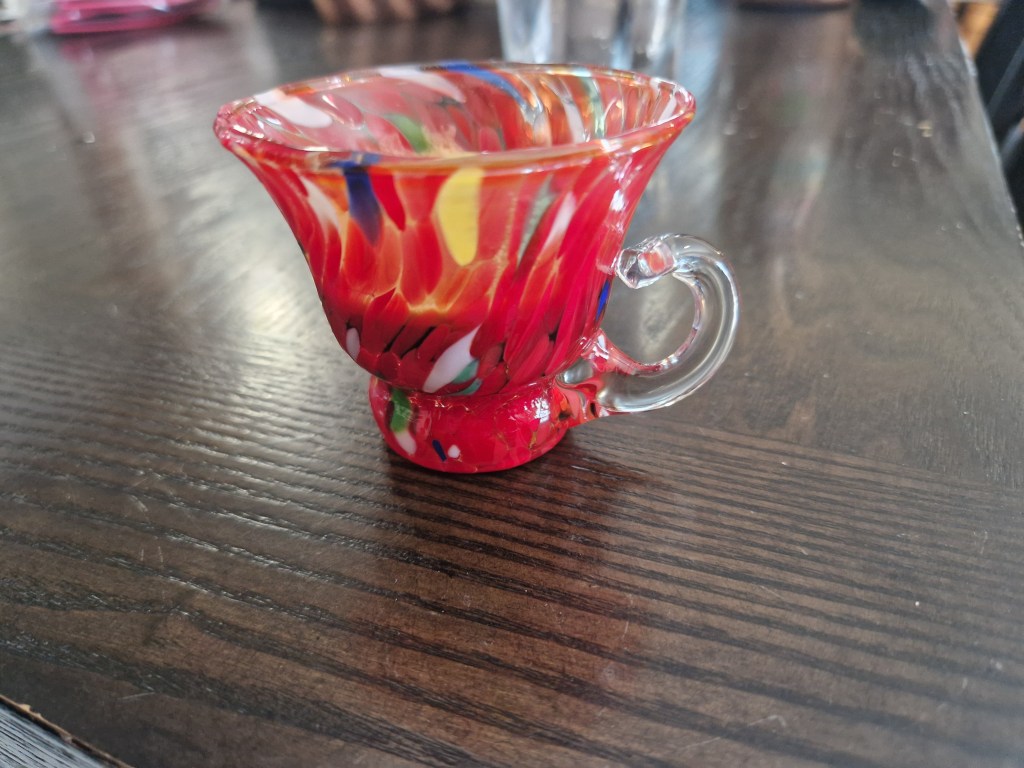
Known for its glass producers, our tour boat stopped at a pier right in front of one. The island is a perfect location for a glass factory, because in addition to the abundance of available raw materials, being surrounded by water limits the risk of fire spreading from a furnace failure. We waited our turn to go into the production demonstration where before our eyes a master artisan crafted a glass horse from a lump of molten glass. After the demonstration we had time to shop in their extensive showroom where items from various artisans were displayed for purchase. Photographs were prohibited so you will have to take my word that everything was beautiful. There was a second-floor showroom where they kept the big, pricey pieces that were artworks, some quite large. We worried about our purchases breaking on the trip home so one of the staff picked up a glass and smacked it against the tabletop to demonstrate the rugged durability of Murano glass. Thus reassured, we purchased a pair of drinking glasses and a few smaller things for gifts. I got a red espresso cup.
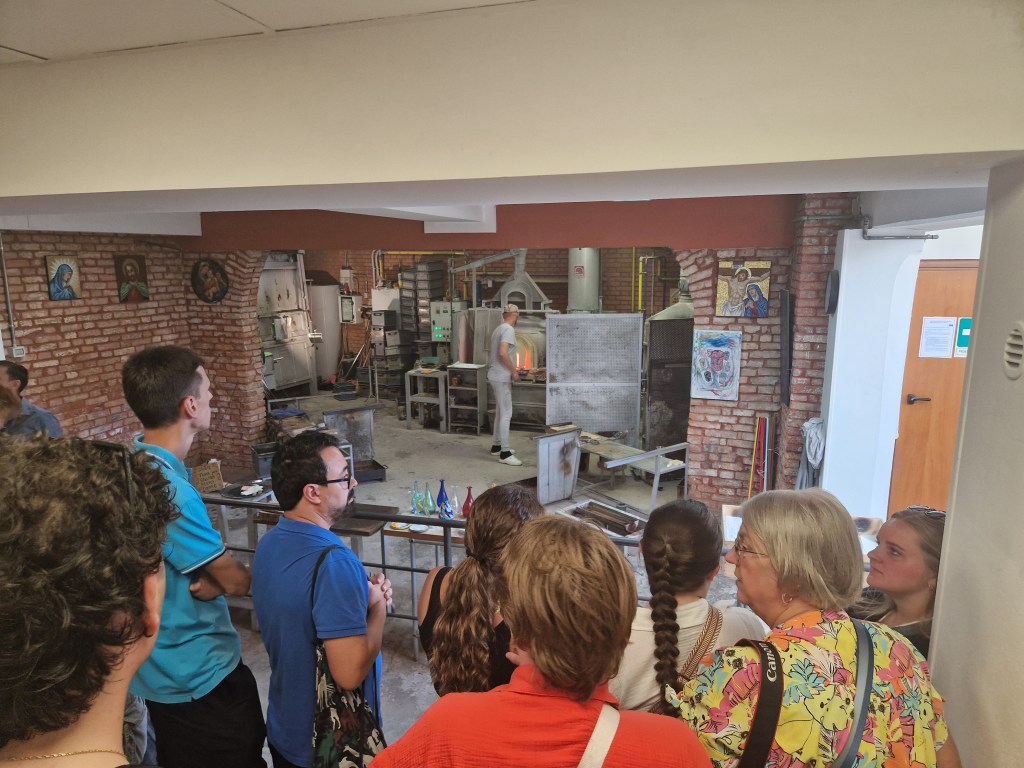
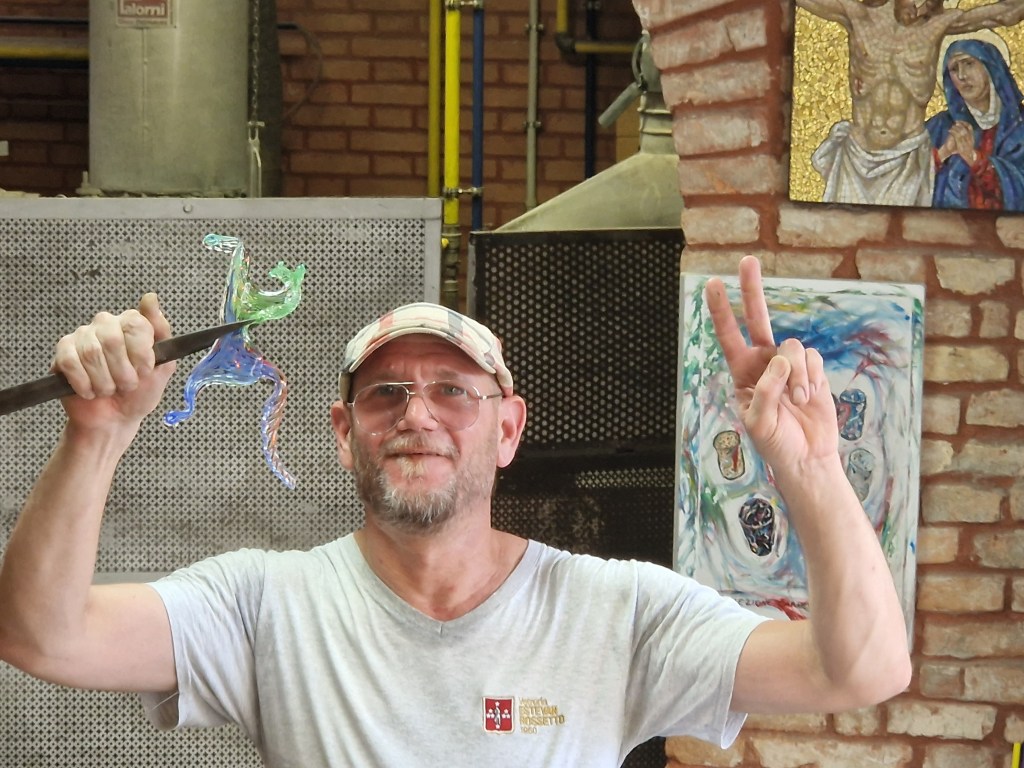
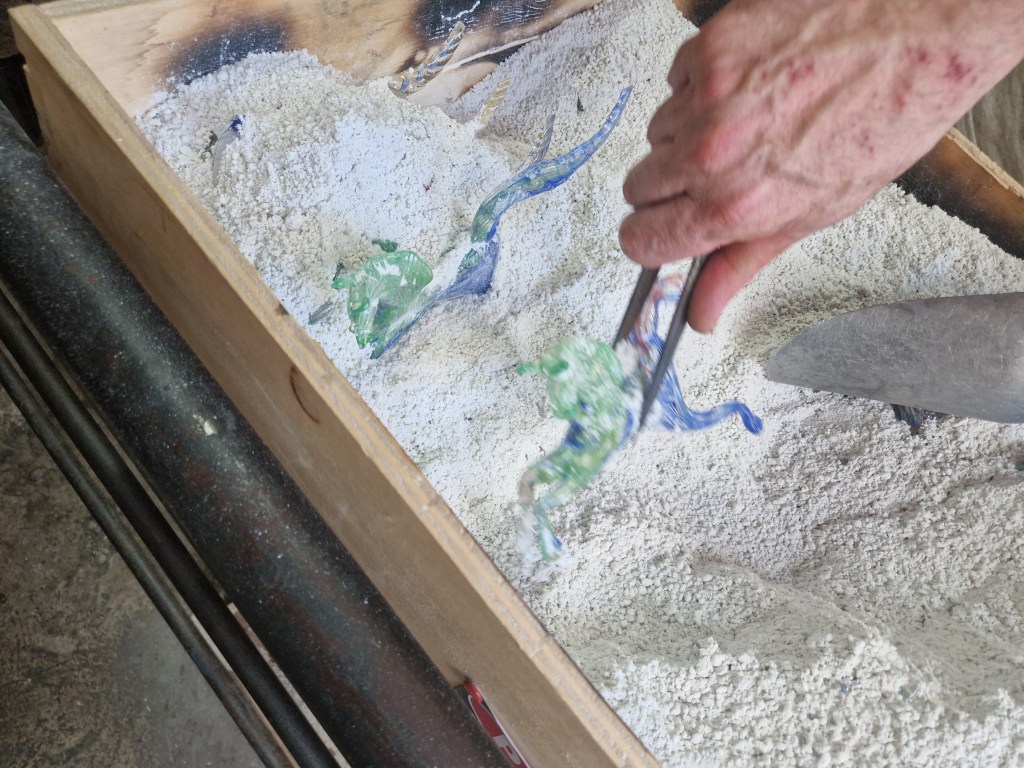
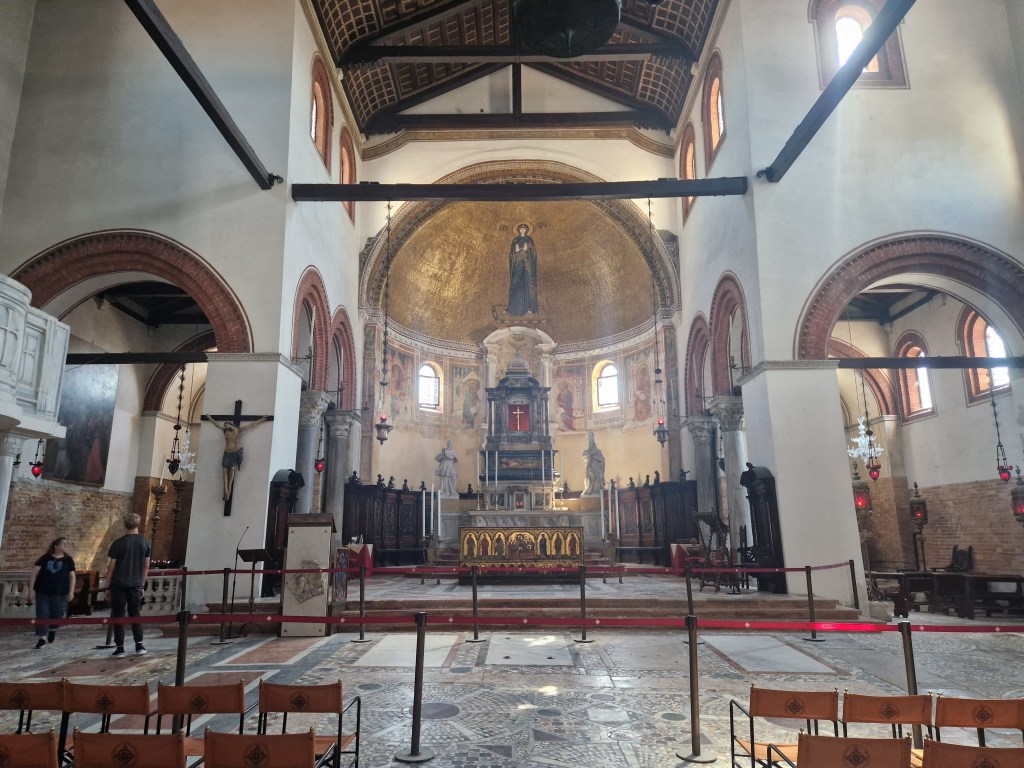
We left Mom and Dad to shop a little while longer and hurried over to the Basilica Santa Maria e San Donato, one of the oldest churches in the Venetian Lagoon, first established in the 7th century. Its mosaics were old (12th century), traditionally made and beautiful. The religious art in this area is old enough to exhibit the influence of the Byzantine Empire and the Greeks. For example, the icon of Mary in the main apse is in the Byzantine style and has the Greek abbreviations for Mother of God, ΜΡ ΘΥ (the first and last letter of the two words in Greek: Μήτηρ Θεοῦ), but also has a Latin inscription around its perimeter. We would see more of the Greek and Latin combined in other churches in the Lagoon. We didn’t have much time to enjoy these, however. We were told in no uncertain terms that if we missed the departure of the tour boat, we were on our own getting back. So, we hustled back and made it in plenty of time.
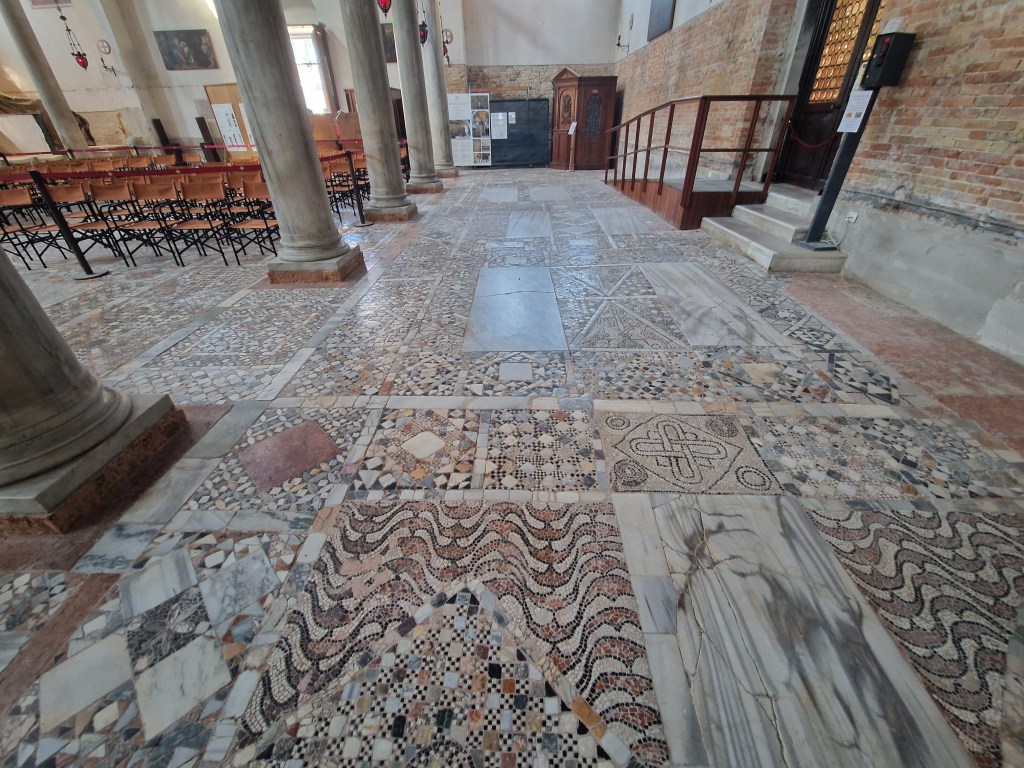
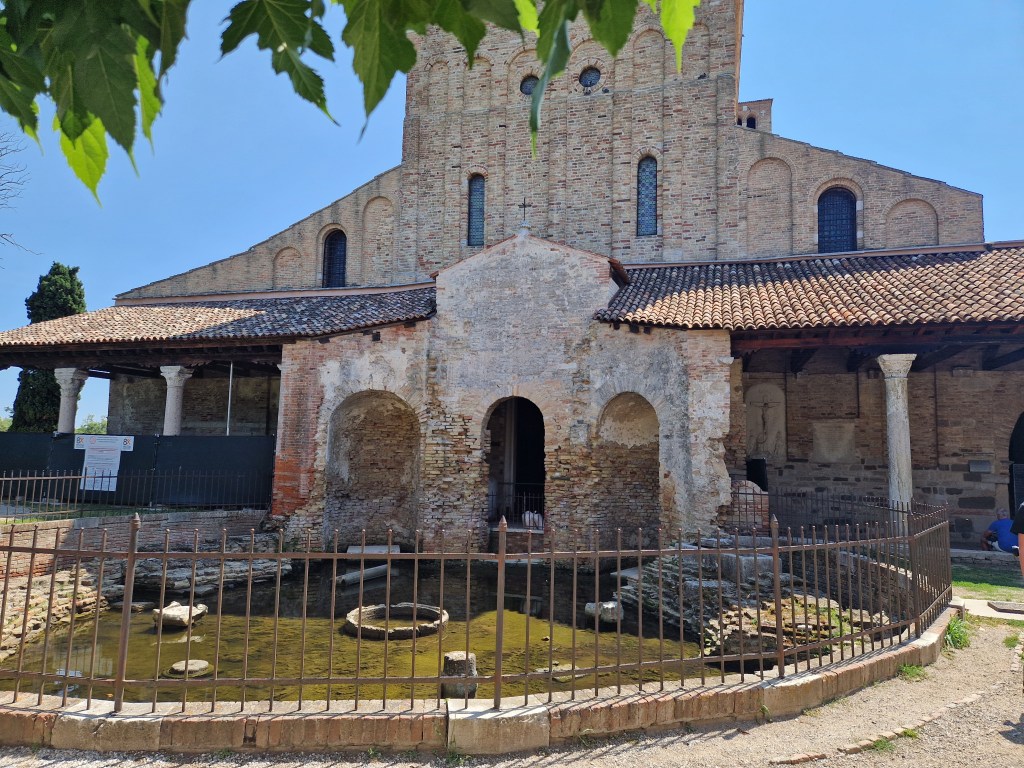
The next island on our itinerary was Torcello. Here there is another noteworthy church, the Basilica of Santa Maria Assunta, which was also built in the 7th century and still shows evidence of early cathedral construction, like an iconostas that extends into the nave. It also has ancient byzantine mosaic icons, but we photographs were prohibited here also, so you’ll have to look them up here. The stop on Torcello was where we thought we’d be able to get lunch, but the best we could do was grab a mixture of some fried foods to carry with us. The mix was nice but included clams and shrimp breaded and fried while still in the shell. How are you supposed to eat that? Let’s just say it was messy. Again, we had to rush so we didn’t miss the boat.
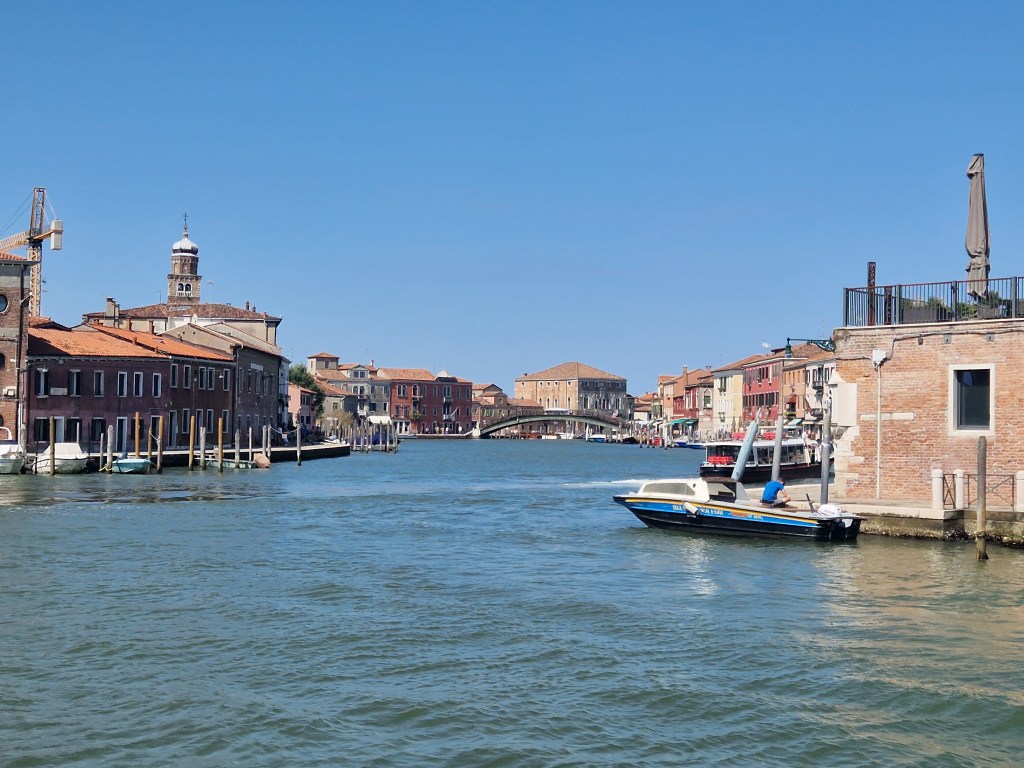
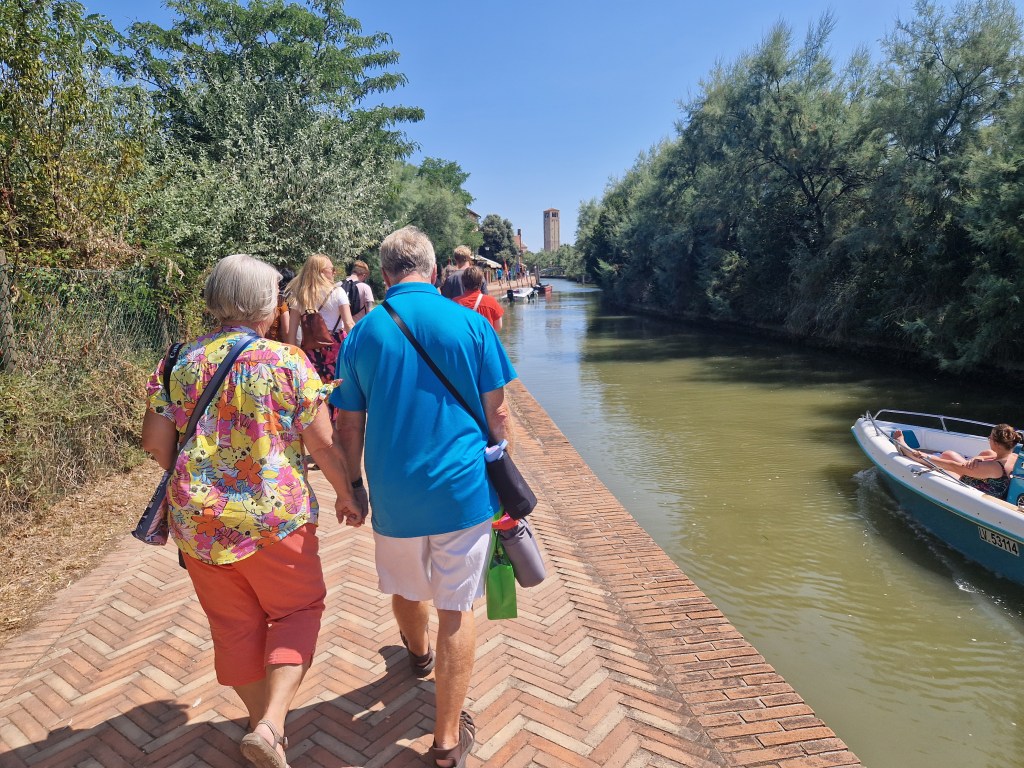
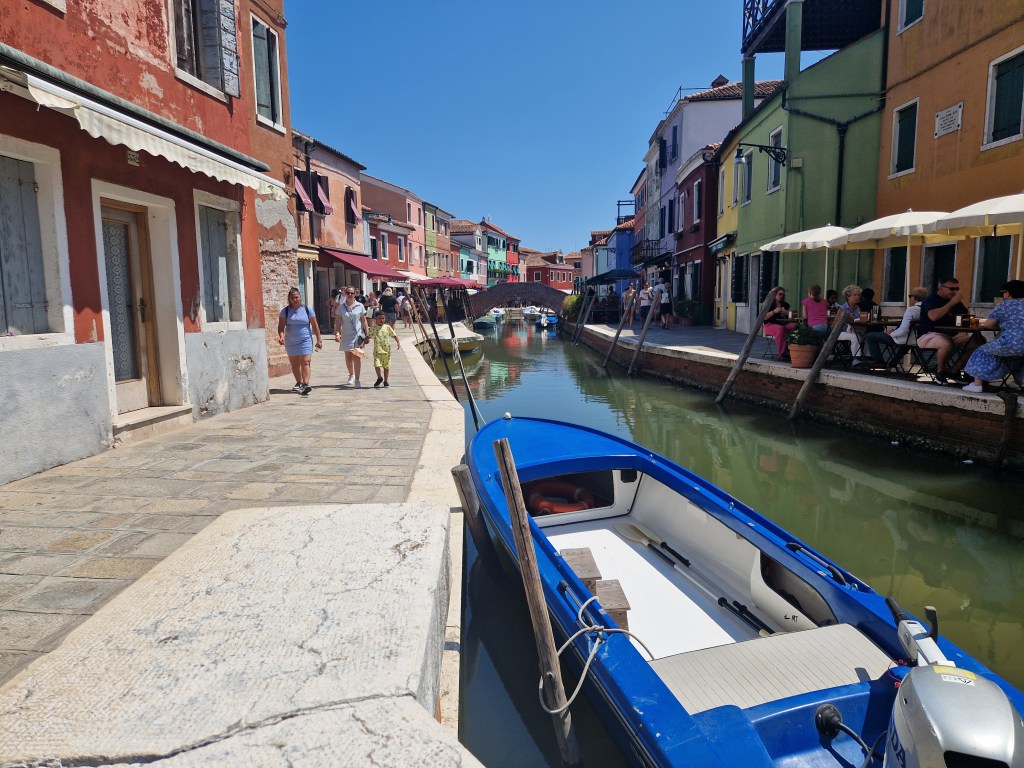
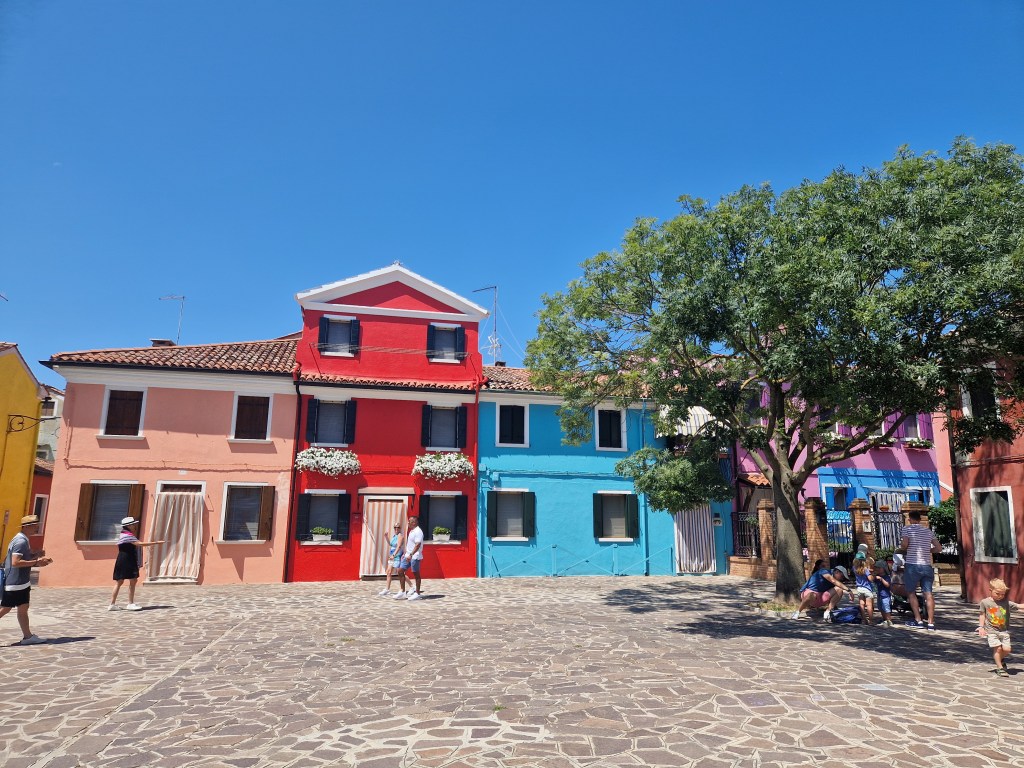
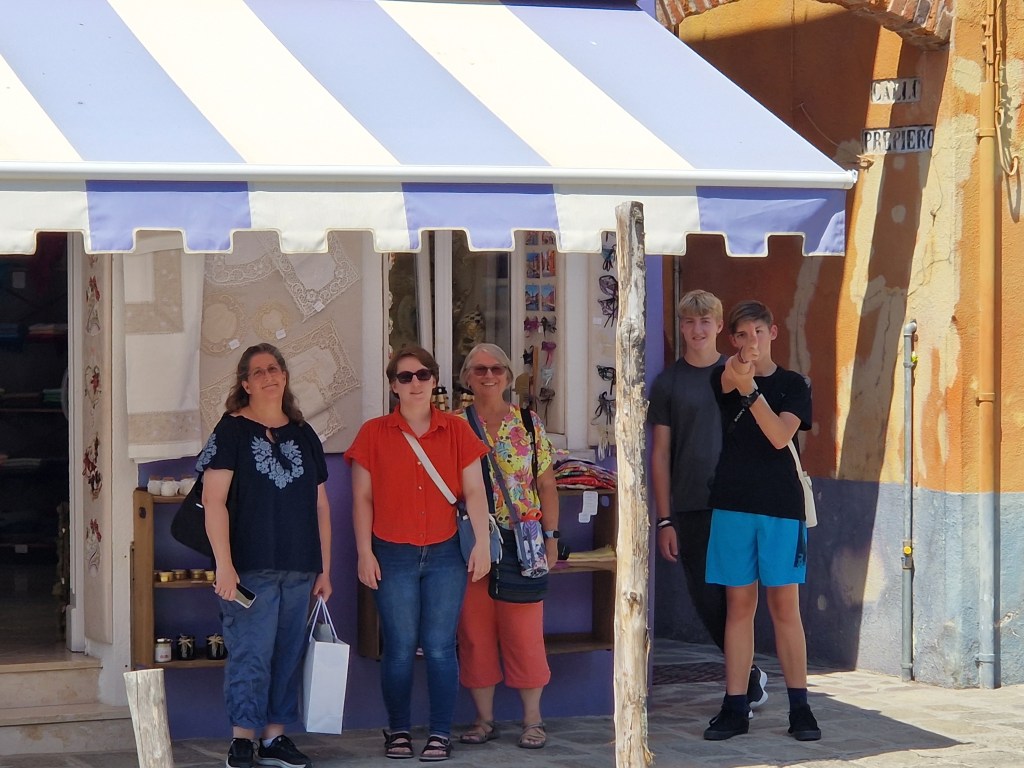
The last island we visited was Burano. Known for lace in the same way Murano is known for glass, there was some shopping to do here also, but it also is an island with a uniquely characteristic beauty. It is said that fishermen who settled here with their families painted their houses so colorfully so that they could be seen from the water. Now, the coloring is regulated and follows a system that requires residents to obtain special permits to paint their homes. Whatever the case, we wandered admiring the unique, yet still Italian, beauty of the place. We enjoyed the shopping, the scenery, and took many pictures before meeting the boat for our trip back to Piazza San Marco and the end of our tour.
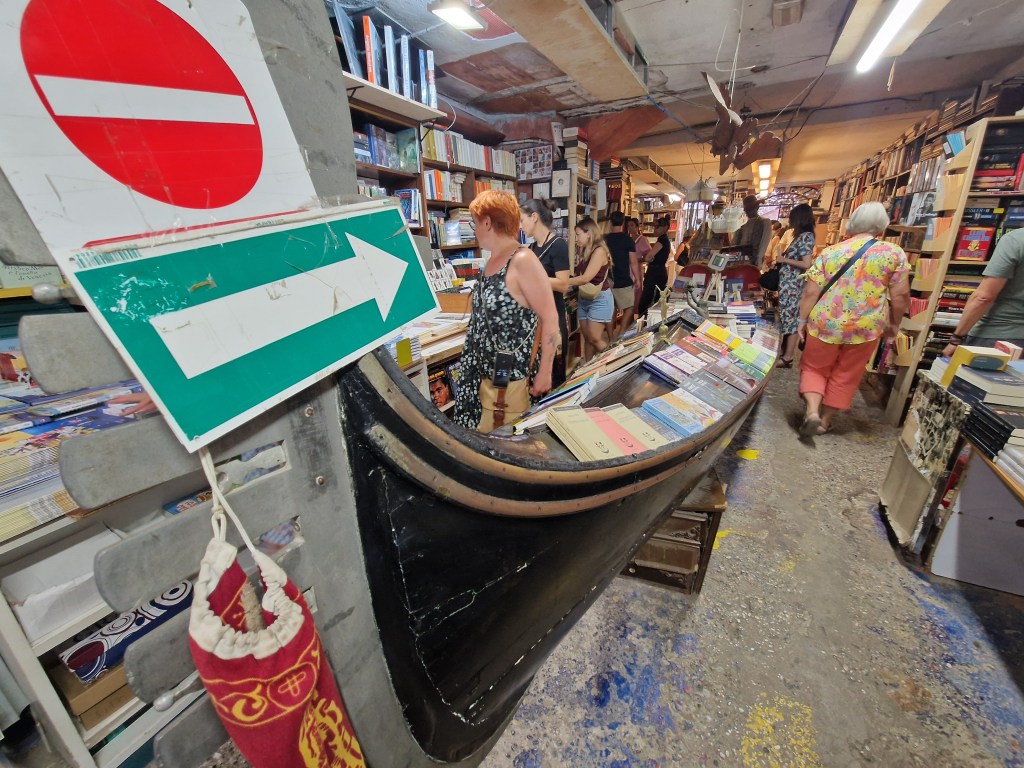
The first order of business when we landed was lunch, which we enjoyed at a café on the waterfront overlooking the Grand Canal, and then we spent the afternoon wandering amidst the shops in Venice. We picked up some nice swag, some of it from the self-described “most beautiful bookshop in the world” Aqua Alta. which was a destination unto itself. Once everyone was sufficiently wearied by walking and shopping, we headed home for the night.

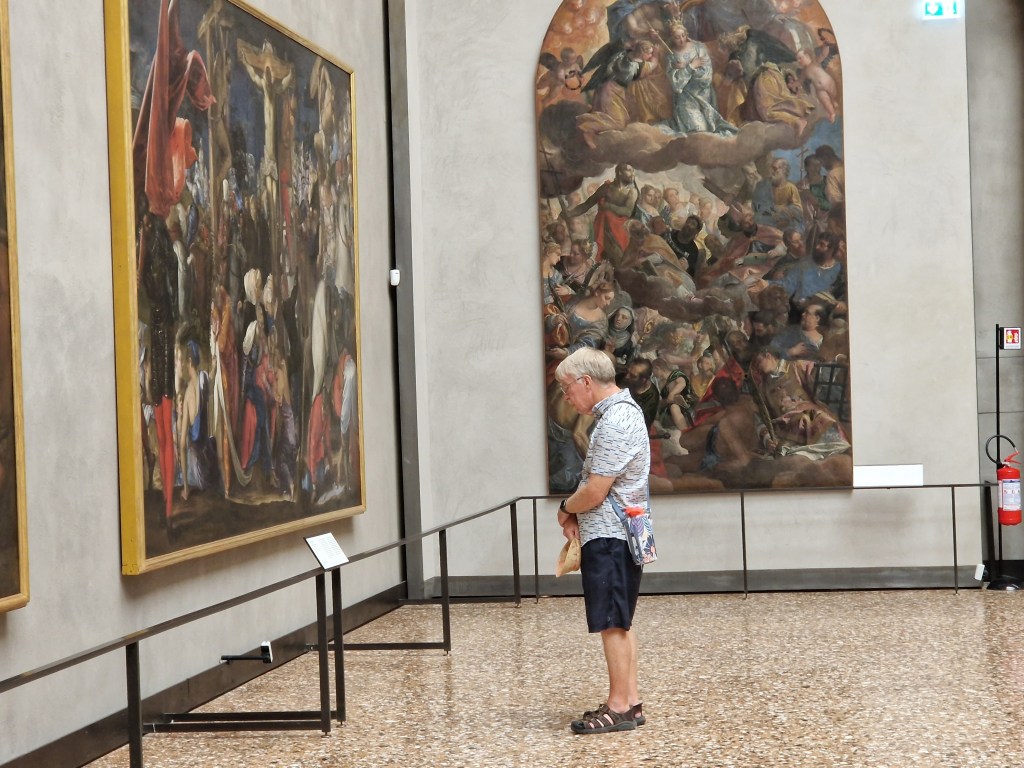
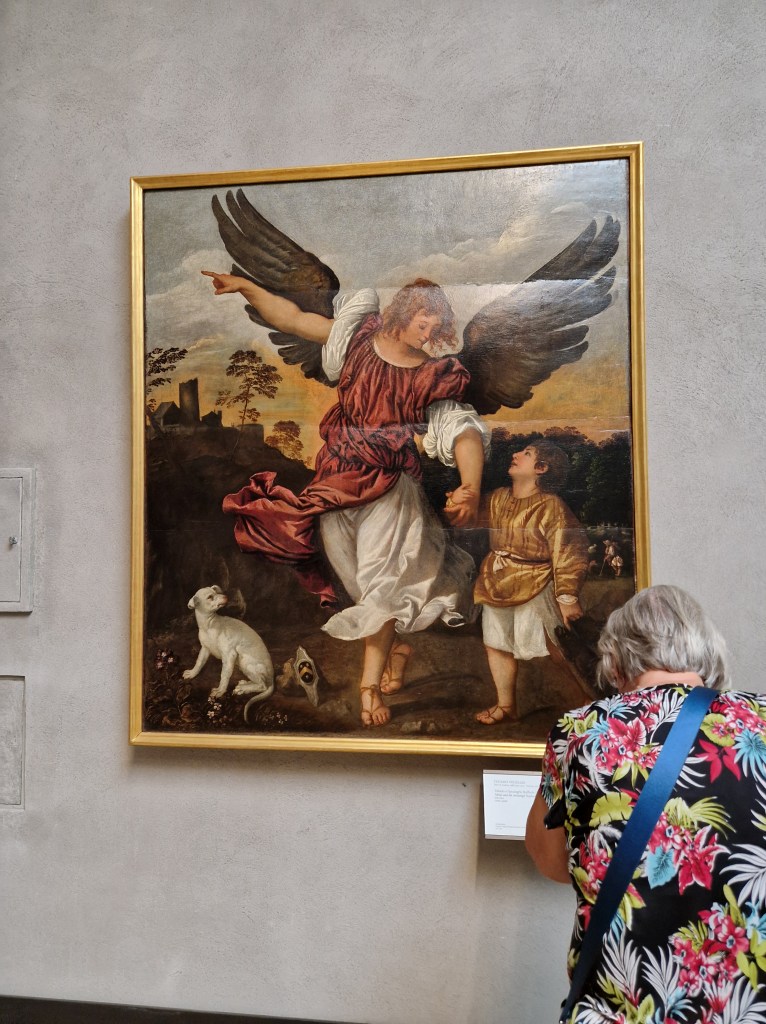
The next day we tried a new adventure and rode the vaporetto for the first time. We took this “water bus” to the Galleria Accademia Venezia, where we spent a couple hours enjoying beautiful and famous works of art.
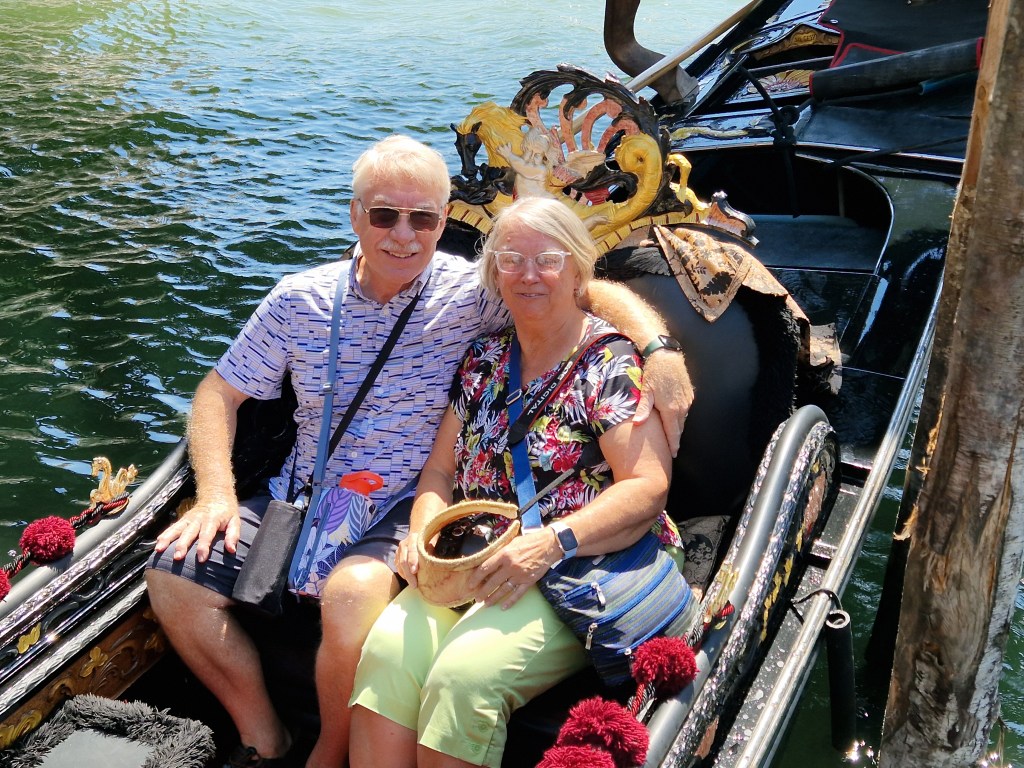
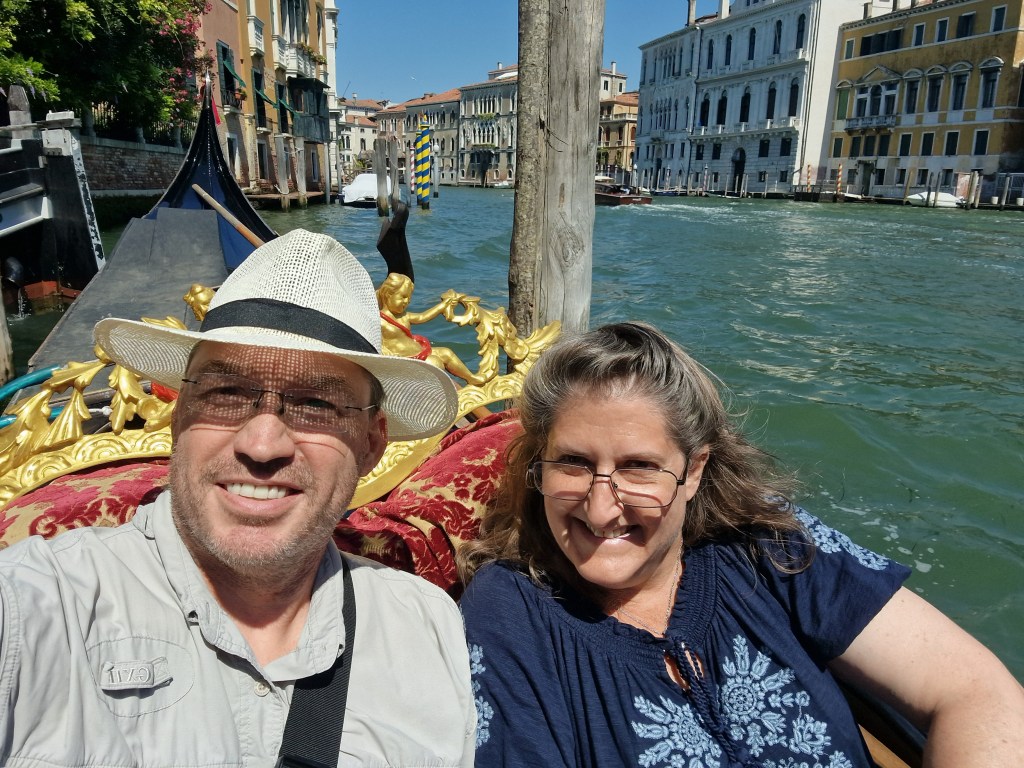
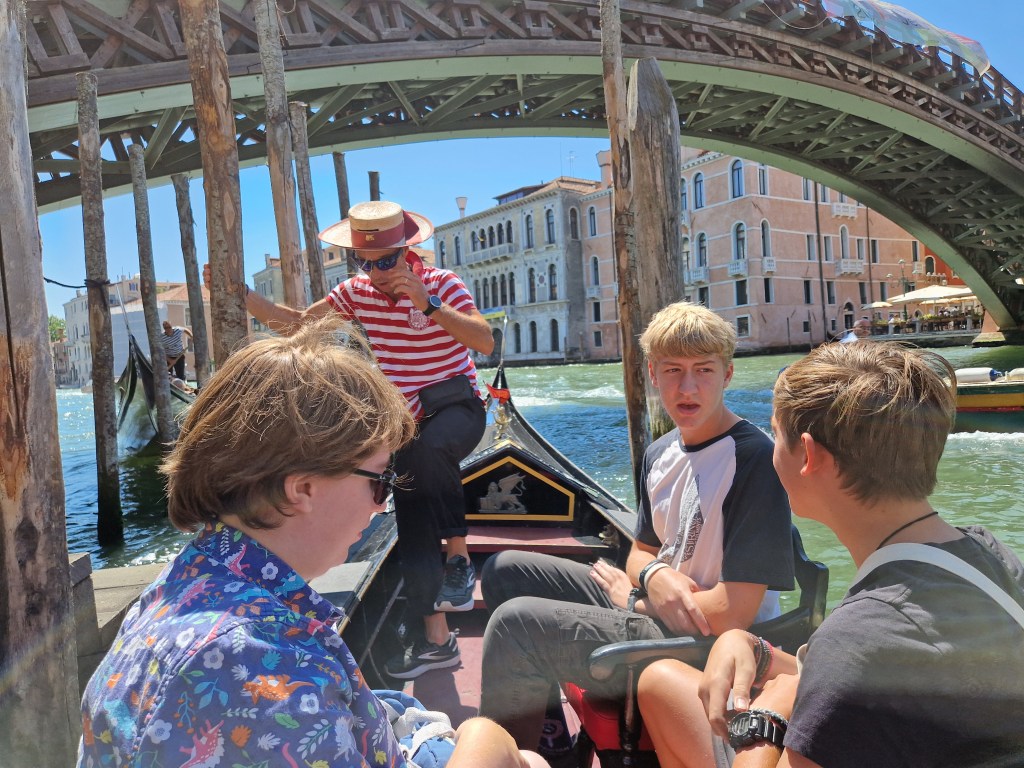
When we left the Academia, we crossed the bridge out front across the Grand Canal to where we hired the two gondolas that took us on our quintessential Venetian experience. The 30-minute gondola ride was a particular highlight for Dad, but one that we all thoroughly enjoyed. Afterwards we got back on the vaporetto and took it on a lap around the city so we could take in all the sights along the Grand Canal and the southern coast of Venice. Then it was back to the lodgings for a nap. We had a long night ahead.
We had tickets to see a string ensemble play Vivaldi’s Four Seasons in a historic venue, but the concert didn’t start until 9pm. So, we went out for dinner, which meant waiting until at least 7pm for the restaurants to open. The concert was performed by Interpreti Veneziani in a renovated Church of San Vidal on the Campo Santo Stefano, which is a large square. We found a restaurant on the square for dinner, where we ate local favorites alfresco within sight of the concert venue. Night fell as we were having dessert and coffee, and upon finishing we walked to the concert and had a lovely time. My family isn’t one that typically stays out late, and so we don’t often participate in typical Italian evenings like that, so this was an unusual treat.
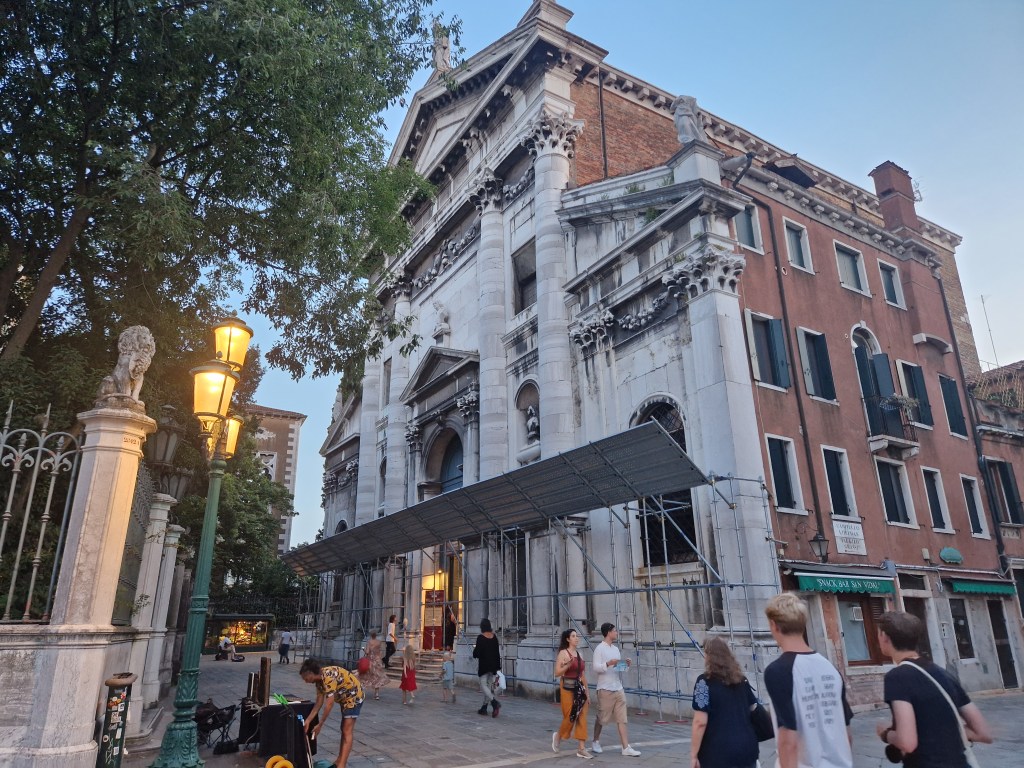

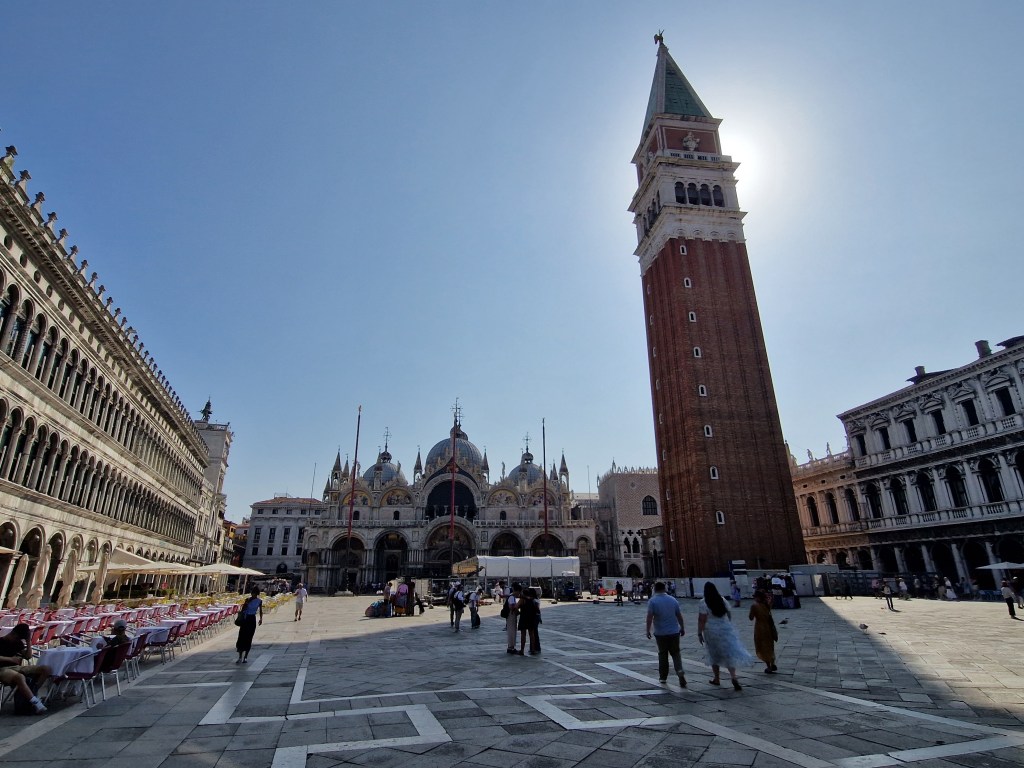
The next day, our last in Venice, we spent our morning touring San Marco and its piazza. Before going there, though, since we had checked out of our lodgings, we found a place with lockers for hire to stash our luggage. That way we didn’t have to lug it around all morning. This was the first time we’d tried this and was worth every Euro.
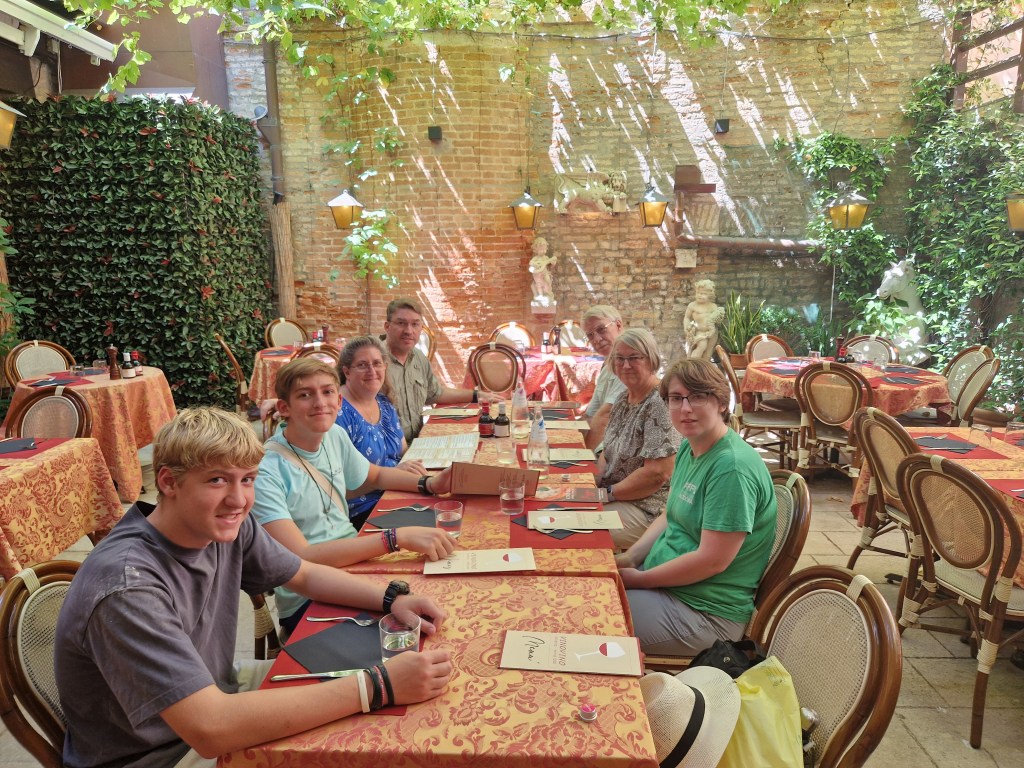
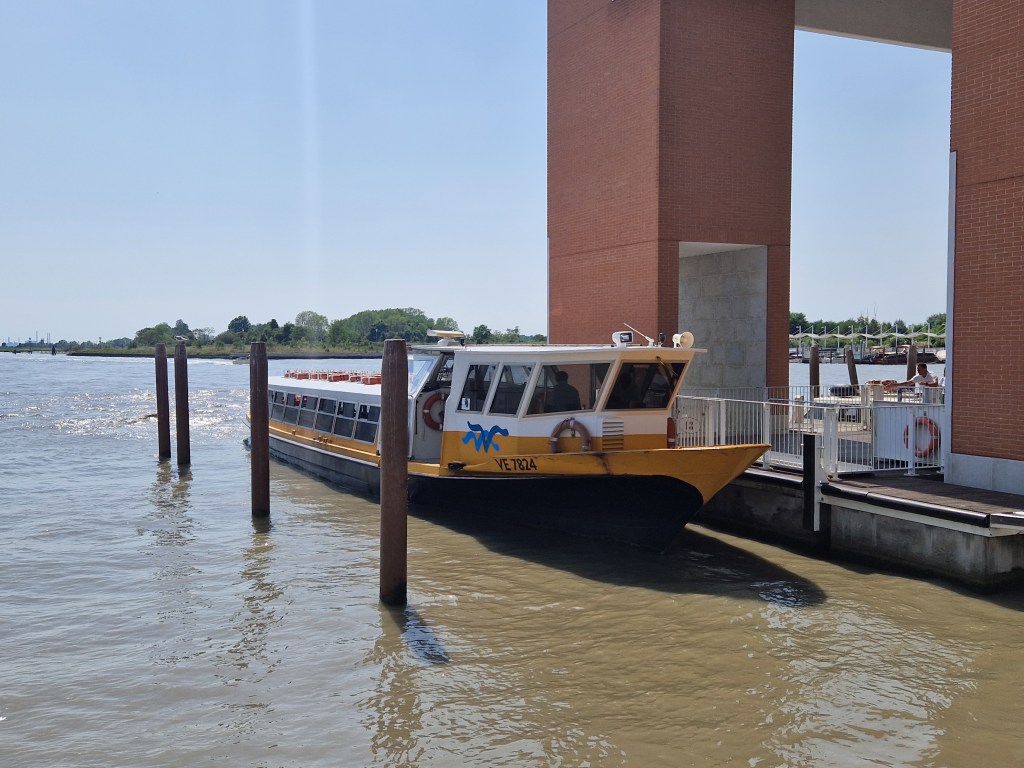
At the cathedral we took many photos, inside and out. What a thrill to have coffee in the shadow of St Mark’s iconic bell tower! We watched the clock tower strike the hour and did some shopping before heading to lunch. The restaurant we found for our last meal in Venice was a pleasant surprise, we would never have known from the street that it contained the beautiful, vine-covered courtyard within. It was lovely and the perfect setting for our Italian meal. Reluctantly, we departed to retrieve our luggage and catch our boat to the airport. (Yes, a boat!)
Our adventure didn’t end there, however. Our flight was delayed leaving Venice, complicating our arrival back in Naples. I was afraid we would miss the last shuttle bus that would take us home from the airport, but we actually did land with plenty of time to catch it. Unfortunately, we were then forced to sit in the plane, on the tarmac, without moving, in sight of the terminal for an HOUR. At one point I thought a riot might break out on the plane, passengers and the crew were yelling at each other in Italian – complete with gestures. By the time we finally walked off the plane we had to hire a couple taxis to take us home, but we made it. We slept really well that night, too.
P.S. For those who may not recognize the young woman in many of our photos, my niece Keyran was able to join my parents in their visit with us. She was a delightful travel companion, a real trooper, and it was great to catch up with her after many years.
*Ralph Waldo Emerson’s description of Venice.
 An Orthodox Priest Abroad
A superb account, including details I didn’t know or didn’t remember. ‘Twas delightful to re-experience these priceless joys.
LikeLike